
Understanding IBS
Why Beans and Lentils Cause Gas (and How to Reduce It)
Why do beans cause gas? It comes down to a specific carbohydrate your gut can't digest. Here's the mechanism and how to find your own portion threshold.

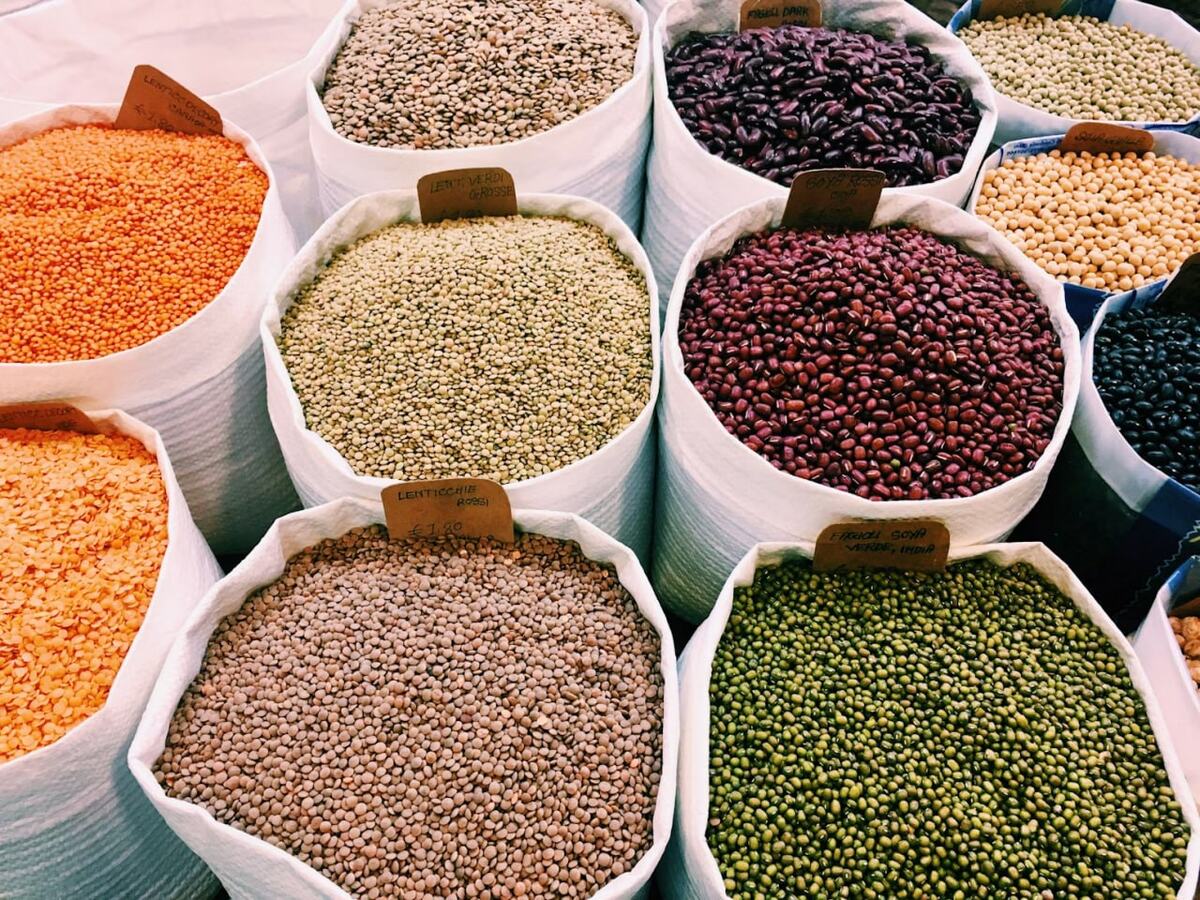
Beans occupy an awkward position in trigger-hunting. Everyone already accepts that they cause gas, so reporting beans as a problem tends to earn a shrug and a joke rather than a follow-up question.
The shrug flattens a real distinction. There is a considerable gap between the ordinary gas most people get from a bowl of chilli and the two-hours-on-the-couch version some people with IBS get from the same bowl. The gas produced is much the same in both cases. What differs is how the gut responds to having it there.
If lentil soup, chickpea curry, or a bean burrito reliably leaves you bloated and gassy within an hour or two, this one's worth understanding properly, because there's a specific, well-documented reason it happens, and a few things that genuinely help.
The actual mechanism: a sugar you can't break down
Beans, lentils, chickpeas, and other legumes are rich in a family of carbohydrates called galacto-oligosaccharides (GOS), the main ones being raffinose and stachyose. These are chains of sugar molecules linked together in a way that requires a specific enzyme, alpha-galactosidase, to break apart. Humans don't produce that enzyme in the small intestine.
So instead of being digested and absorbed like most carbohydrates, GOS travels intact all the way to the large intestine. There, it meets a dense population of gut bacteria that ferment it readily, producing hydrogen, carbon dioxide, and in some people methane, as byproducts. That gas is what causes the bloating, distension, cramping, and flatulence people associate with beans.
GOS is one of the FODMAP categories (the "O" for oligosaccharides), alongside fructans, the compound responsible for onion and garlic reactions. Beans and onions cause gas through a related mechanism, fermentable sugars the small intestine can't absorb, even though the specific sugar involved is different.
This isn't a sign anything is wrong with your gut. Fermentation of GOS happens in everyone, because no human produces enough alpha-galactosidase to fully digest it. What varies enormously is how much gas that fermentation produces, and how sensitive your gut is to the resulting distension. That sensitivity is a hallmark of IBS specifically, not a separate issue.
Hydrogen, methane, and why the gas itself varies
Not everyone's gut bacteria ferment GOS the same way. Some people host more hydrogen-producing bacteria, while others carry more methanogens, archaea that convert hydrogen into methane. This matters beyond the smell or sound of the gas: methane production is associated with slower colonic transit, and people who test positive for methane on breath testing more often report constipation-predominant symptoms, while hydrogen-dominant fermentation is more often linked with looser stools. If beans consistently constipate rather than simply cause gas, methane-producing fermentation may be part of why, and it's worth reading how that fits into the broader IBS subtypes if you haven't sorted out whether you lean more IBS-C, IBS-D, or IBS-M.
This is also why breath testing exists: a hydrogen and methane breath test after a lactulose challenge can show, objectively, which gas your gut favors.
Why some people tolerate beans fine and others can't
Three factors drive most of the difference:
- Gut microbiome composition, some bacterial populations ferment GOS more aggressively or produce more gas than others
- Visceral hypersensitivity, a well-documented feature of IBS where normal amounts of gas and distension register as pain or discomfort rather than passing unnoticed
- Adaptation over time, people who eat legumes regularly often build a somewhat more tolerant gut than people who eat them rarely and in large amounts
- Total dose in one sitting, a small serving alongside other food is metabolized differently than a large bowl of chili eaten on its own
Preparation changes the GOS load significantly
This is the most actionable part, and it's genuinely underused. GOS is water-soluble, which means a meaningful amount leaches out of beans during soaking and cooking, if you do it the right way.
- Soak dried beans for at least 8-12 hours and discard the soaking water before cooking, rather than cooking them in it. Canned beans are convenient but sit in their GOS-rich liquid, so draining and rinsing canned beans thoroughly removes some of the load.
- Cook thoroughly. Undercooked legumes retain more resistant starch and GOS than fully cooked ones.
- Use a pressure cooker or long, slow simmer. Extended, high-heat cooking breaks down more of the oligosaccharide structure than a quick boil.
- Try sprouted or fermented legume products (sprouted lentils, tempeh, miso), sprouting and fermentation both reduce GOS content measurably, because the process that makes them digestible for the plant also processes the sugars.
- Consider an alpha-galactosidase enzyme supplement (sold over the counter, often marketed for this exact purpose) taken with the first bite of a legume-containing meal, which supplies the enzyme your gut is missing.
Rinsing canned beans under running water for a full minute, not just a quick swirl, removes a noticeably larger share of the surface GOS than a fast rinse.
Finding your own portion threshold
Because GOS sensitivity is dose-dependent for most people, the goal usually isn't total avoidance, it's finding the amount you can eat without triggering symptoms. That threshold is genuinely individual, and the only reliable way to find it is structured testing:
- Start with a small, well-prepared serving (soaked, rinsed, thoroughly cooked) of a single legume type, and note the amount precisely.
- Track symptoms for the full 6 hours afterward. GOS fermentation doesn't start until the carbohydrate reaches your colon, so an uneventful first hour tells you nothing.
- If tolerated, try a slightly larger portion on a separate day, and repeat.
- Once you find a reliable ceiling, test whether it changes with different legumes, lentils, chickpeas, black beans, and kidney beans all contain different absolute amounts of GOS, so your threshold for one may not match another.
This kind of dose-finding is tedious to do from memory, which is exactly the kind of pattern tracking food and symptoms methodically is built for. Logging portion size alongside symptom timing, rather than just "had beans, felt bad," is what turns a vague suspicion into a usable number.
Find your legume threshold
Log meals and symptoms by voice or text, including portion size. AI surfaces dose-dependent patterns like your personal legume threshold, not just a yes-or-no trigger list.
Start Tracking Free →If beans and lentils are one piece of a broader gas problem, it's worth reading about chronic gas and flatulence more generally, since GOS is one of several common fermentable carbohydrates that overlap in the foods that cause it, alongside fructans in onion and garlic and other FODMAP categories.
When it's not just gas
Excessive flatulence and bloating after legumes is usually a normal, if uncomfortable, GOS fermentation response. But if beans consistently cause severe pain, diarrhea that disrupts your day, or symptoms that don't settle within several hours, it's worth discussing with a doctor rather than assuming it's "just beans." The Rome IV framework used to diagnose IBS considers exactly this kind of recurring, food-linked pattern, and a clinician can help rule out other causes.
There's also an unrelated safety issue specific to kidney beans worth separating from ordinary GOS gas: undercooked red kidney beans contain a natural toxin, phytohaemagglutinin, and eating them without a proper hard boil can cause severe nausea, vomiting, and diarrhea within hours, driven by toxin exposure rather than fermentation. Slow cookers don't reliably reach the temperature needed to destroy it, so kidney beans should be boiled hard first. That kind of sudden reaction is a food-safety issue, not a sign your GOS threshold is unusually low.
Beans and lentils cause gas because they contain GOS (raffinose and stachyose), sugars the small intestine can't digest, which get fermented by colon bacteria into hydrogen, carbon dioxide, and sometimes methane. Soaking, thorough cooking, rinsing canned beans, and enzyme supplements all reduce the load. Because tolerance is dose-dependent, the most useful next step is finding your own portion threshold through structured tracking rather than avoiding legumes altogether.
Sources
- Monash University FODMAP Diet - GOS (galacto-oligosaccharide) content and fermentation mechanisms in legumes
- Mearin F, Lacy BE et al. "Bowel Disorders" - Gastroenterology 2016;150:1393-1407 (Rome IV diagnostic framework for IBS)
- Malagelada JR et al. "Bloating and abdominal distension: old misconceptions and current knowledge" - American Journal of Gastroenterology 2017;112:1221-1231


This article is for informational purposes and is not medical advice. Talk to your doctor before making dietary changes.
Start with the free 7-Day Trigger Discovery Challenge
Not ready for the app yet? Download the printable guide and work through 7 days of structured observation, with a few practical follow-up emails to help you stay on track.
- 20-page guide delivered immediately by email
- Daily meal, symptom, and lifestyle tracking pages
- Designed to help you spot early trigger patterns without overwhelm
Free - delivered straight to your inbox
🔒 No spam, we promise. Unsubscribe any time.
Or skip straight to the app - start tracking free →
Ready to find your triggers?
Track by voice. Let AI surface possible patterns.
Log meals and symptoms in seconds. AI structures your data and surfaces possible patterns, including delayed associations worth testing.
Start Tracking Free →Free to start · $59 one-time for full insights · No subscription