
Guides
The Low-FODMAP Diet Explained - Is It Right for You?
The low-FODMAP diet is the most evidence-backed dietary approach for IBS. But it's easy to do wrong. Here's what you need to know before you start - including the phase most people skip.


Quick answer: The low-FODMAP diet is a three-phase dietary intervention for IBS: a short restriction phase, structured reintroduction, and personalization. It can improve symptoms for some people, but it is restrictive and is best undertaken with a registered dietitian - especially if you are underweight, pregnant, have other medical conditions, or have a history of disordered eating.
The low-FODMAP diet is one of the better-studied dietary interventions for IBS. Clinical studies and reviews report symptom improvement for many participants, but results vary and the diet does not help everyone. It is also frequently misapplied: a short restriction phase can turn into a permanent, unnecessarily restrictive way of eating when reintroduction and personalization are skipped.
Let's go through what FODMAPs actually are, how the three-phase protocol works, and whether this approach is right for your situation.
What are FODMAPs?
FODMAP stands for Fermentable Oligosaccharides, Disaccharides, Monosaccharides And Polyols. They're a group of short-chain carbohydrates and sugar alcohols that are poorly absorbed in the small intestine.
When they reach the large intestine, gut bacteria ferment them rapidly - producing gas, drawing in water, and causing the bloating, cramping, urgency, and altered bowel habits that characterize IBS.
The main FODMAP groups are:
- Fructans - wheat, garlic, onion, rye, leeks, asparagus
- Lactose - cow's milk, soft cheeses (ricotta, mascarpone), ice cream, cream
- Fructose (in excess) - honey, apples, pears, mango, dried fruits, high-fructose corn syrup
- GOS (galacto-oligosaccharides) - legumes, chickpeas, lentils, kidney beans
- Polyols - stone fruits (peaches, plums, cherries, nectarines), mushrooms, cauliflower, sweeteners ending in "-ol" (sorbitol, mannitol, xylitol)
Not all FODMAPs are equal, and not everyone reacts to all FODMAP groups. Most people with IBS react to 2-3 specific groups rather than all of them. This is why the reintroduction phase matters so much - it identifies your specific sensitivities rather than leaving you avoiding everything indefinitely.
The three phases - and why most people only do one
The low-FODMAP approach has three distinct phases. Most people start phase 1, feel better, and stop. This is a mistake.
Phase 1: Elimination (2-6 weeks)
You remove all high-FODMAP foods from your diet. This means cutting out garlic, onion, wheat, dairy, most legumes, stone fruits, and a long list of other foods.
This phase is not meant to be permanent. If symptoms improve, that suggests some FODMAP groups may be contributing, but the restriction phase alone does not identify which foods or prove causation. If symptoms do not improve, discuss stopping or changing the approach with a dietitian or clinician rather than extending the restriction yourself.
The Monash University FODMAP app is the gold standard resource for checking whether specific foods and portions are low or high FODMAP. Many people are surprised to find that some foods they assumed were problematic are actually low FODMAP, and vice versa. Get the app before you start - guessing is not reliable enough.
Phase 2: Reintroduction (6-8 weeks)
This is where most people stop. It's also the most important phase.
You systematically reintroduce FODMAP groups one at a time to identify which specific categories you react to. The process looks like this:
- Choose one FODMAP group to test (e.g., fructans from wheat)
- Eat a test serving of a food containing only that FODMAP (e.g., plain white pasta - wheat fructans only)
- Track symptoms for 24-72 hours
- Return to elimination baseline, then test the next group
Most people find they react strongly to 2-3 groups, mildly to a couple more, and not at all to several. This is enormously useful information.
Phase 3: Personalization
Based on repeated reintroduction results, you build a long-term diet around the foods and portions you tolerate, restricting only those that produce a repeatable response. A dietitian can help keep this phase nutritionally adequate and as varied as possible.
For example: if you discover you react to fructans (garlic, onion, wheat) but not to lactose, GOS, or polyols, you keep dairy, legumes, stone fruits, and mushrooms in your diet while being careful with garlic, onion, and wheat. Your diet is dramatically less restrictive than full low-FODMAP.
Staying on full low-FODMAP long-term means you're unnecessarily avoiding foods you don't react to, missing out on prebiotic fibers that are important for gut health, and making your diet harder to sustain socially and nutritionally.
Foods to avoid on low-FODMAP (phase 1)
This is not a complete list - use the Monash app for detailed guidance - but here are the major categories:
- Garlic and onion (in all forms, including powders and stocks)
- Wheat-based products (bread, pasta, most cereals)
- Cow's milk, soft cheeses, ice cream, yoghurt (regular)
- Apples, pears, mangoes, cherries, peaches, plums
- Chickpeas, lentils, kidney beans, baked beans
- Mushrooms, cauliflower, asparagus, leeks
- Honey, high-fructose corn syrup, agave
- Sugar-free products containing sorbitol, mannitol, or xylitol
Foods you can eat on low-FODMAP (phase 1)
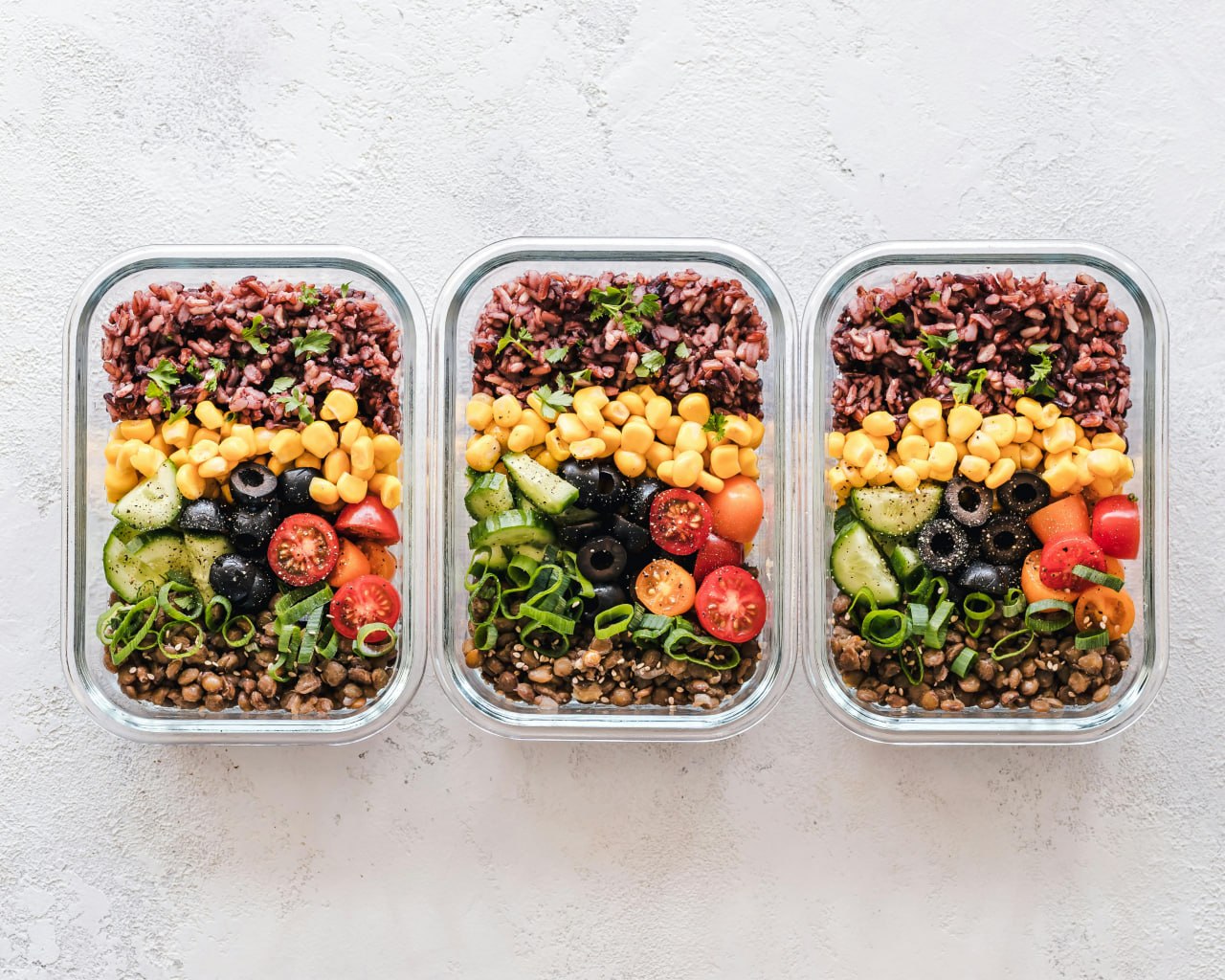
Despite the long list of restrictions, there's plenty of food available:
- Rice, quinoa, oats, gluten-free pasta and bread
- Beef, chicken, fish, eggs, tofu
- Hard cheeses (cheddar, parmesan), lactose-free dairy
- Strawberries, blueberries, oranges, grapes, kiwi
- Carrots, courgette, spinach, bell peppers, cucumber, tomatoes
- Potatoes, sweet potatoes (in moderate portions)
- Nuts (macadamia, walnuts, pecans - in small amounts)
- Garlic-infused oil (FODMAPs don't transfer into oil)
Is low-FODMAP right for you?
The low-FODMAP diet may be worth discussing with a clinician or registered dietitian if you have IBS and dietary symptoms remain difficult to manage. It should not be used to self-diagnose IBS or another condition.
It's less relevant if:
- Your IBS symptoms are primarily stress-driven rather than food-triggered (stress management and gut-directed therapy may be more valuable first steps)
- You have inflammatory bowel disease (IBD) - the low-FODMAP diet is designed for IBS, not IBD
- You have a history of disordered eating - the restrictive nature of the elimination phase can be triggering
Always get tested for celiac disease before starting the low-FODMAP diet. Celiac testing requires you to be eating gluten regularly - if you cut out wheat first, the test becomes unreliable. Your GP can arrange a simple blood test (TTG antibodies) before you change your diet.
Using a tracker with low-FODMAP
The reintroduction phase is where structured tracking pays off most. You're introducing specific foods at specific amounts and watching for reactions over 48-72 hours - exactly the kind of systematic data collection that's almost impossible to do reliably from memory.
Without tracking:
- You forget exactly what you ate during a test
- You confuse which FODMAP group you were testing
- Symptoms blur across days and you can't tell if a reaction was from the test food or something else
- You end up back at square one
Skip the guesswork on reintroduction
The elimination phase is the easy half. Log meals and symptoms by voice or text and let the app track which FODMAP group each reaction belongs to, so reintroduction produces an answer instead of a shrug.
Start Tracking Free →The low-FODMAP diet uses a short restriction phase, structured reintroduction, and personalization. Improvement during restriction is a clue - not confirmation - and reintroduction helps test which groups and portions produce repeatable symptoms. Because the diet is restrictive, use qualified guidance and do not stay in phase 1 indefinitely.
How this article was created: Written by Kesava, founder of Find My Triggers, based on lived experience with IBS since 2018 and research from Monash University guidelines and peer-reviewed studies on FODMAP interventions. Articles are reviewed for accuracy against published medical literature but are not clinically reviewed by a physician. This is informational content, not medical advice.
Sources
- Monash University - About FODMAPs and IBS (FODMAP definition, fermentation mechanism, three-phase diet protocol)
- Halmos EP et al. "A diet low in FODMAPs reduces symptoms in patients with IBS" - Gastroenterology 2014;146(1):67-75
- Gibson PR & Shepherd SJ. "Evidence-based dietary management of functional gastrointestinal symptoms: the FODMAP approach" - Journal of Gastroenterology and Hepatology 2010;25(2):252-258 (FODMAP classification and reintroduction protocol)
- National Institute of Diabetes and Digestive and Kidney Diseases (NIDDK). "Irritable Bowel Syndrome (IBS)"



This article is for informational purposes and is not medical advice. Talk to your doctor before making dietary changes.
Start with the free 7-Day Trigger Discovery Challenge
Not ready for the app yet? Download the printable guide and work through 7 days of structured observation, with a few practical follow-up emails to help you stay on track.
- 20-page guide delivered immediately by email
- Daily meal, symptom, and lifestyle tracking pages
- Designed to help you spot early trigger patterns without overwhelm
Free - delivered straight to your inbox
🔒 No spam, we promise. Unsubscribe any time.
Or skip straight to the app - start tracking free →
Ready to find your triggers?
Track by voice. Let AI surface possible patterns.
Log meals and symptoms in seconds. AI structures your data and surfaces possible patterns, including delayed associations worth testing.
Start Tracking Free →Free to start · $59 one-time for full insights · No subscription