
Understanding IBS
Traveling With IBS: Staying Ahead of Triggers
New food, disrupted routine, and unfamiliar water can unsettle IBS on a trip. Here's how to prepare, what raises risk, and how to keep tracking on the road.

Travel removes every element of an IBS management routine simultaneously. Different food, different water, a shifted sleep schedule, more stress, no control over meal timing, and a bathroom situation that can't be predicted more than an hour ahead.
Handled as bad luck, a rough trip stays rough. Handled as a distinct risk environment - one where several small factors stack rather than one big one arriving - it becomes something you can plan for, which is most of what this article is about.
None of this means avoiding travel. It means understanding what specifically raises risk while you're away, and building a light version of your usual tracking habit that survives time zones and unfamiliar restaurants.
Why travel is a distinct risk category, not just "eating differently"
It's tempting to think of travel IBS risk as purely a food problem, but several factors stack on top of each other:
- Routine disruption itself, irregular meal timing, different sleep hours, and jet lag all independently affect gut motility and the stress-gut relationship covered in can stress make IBS worse
- Unfamiliar water and food handling standards in some destinations carry a real risk of infectious gastroenteritis, which is a different problem from your usual IBS triggers but can feel similar in the moment
- Restaurant-heavy eating for the whole trip removes the ingredient control you'd normally have at home, covered in more detail in eating out with IBS
- Anxiety about access to a bathroom in unfamiliar settings can itself trigger urgency, an anticipatory loop that's real even though it isn't about the food at all
The gastroenteritis connection worth knowing about
One risk specific to travel deserves its own mention: infectious gastroenteritis contracted abroad (commonly called travelers' diarrhea) carries a documented, elevated risk of triggering post-infectious IBS, or worsening existing IBS, that can persist well after the trip itself.
A 2015 systematic review and meta-analysis put numbers on this: post-infectious IBS developed in 5.4% of people who had travellers' diarrhoea, versus 1.4% of those who didn't - a pooled relative risk of about 3.4. Severity of the original illness, antibiotic use during it, and psychological distress at the time all raised the risk further. In absolute terms the odds are still in your favour; the point is that a bad stomach bug abroad is a genuine risk factor rather than just a ruined week.
This isn't a reason to avoid travel, but it is a reason to take basic food and water safety seriously in destinations where infectious gastroenteritis risk is higher: reasonably cautious choices around tap water, ice, and street food, along with prompt attention if a stomach bug does hit, rather than assuming it will pass like a normal flare.
If you develop diarrhea while traveling that includes fever, blood, or signs of dehydration, or that doesn't improve within a few days, seek medical care rather than assuming it's a normal IBS flare. Infectious gastroenteritis can require different treatment than a typical trigger-driven episode, and untreated dehydration is a real risk, especially in hot climates.
A practical pre-trip checklist
A little preparation goes a long way toward reducing the number of variables changing at once:
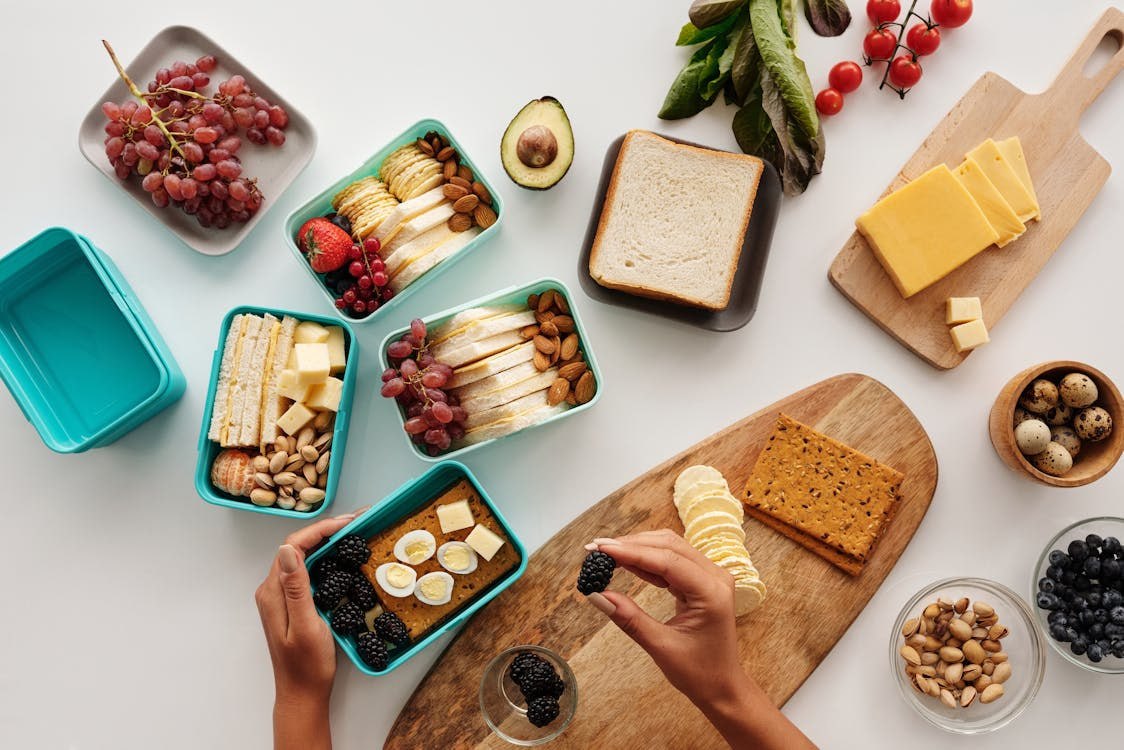
- Pack a small kit of foods you know are safe for you, especially for the first day when you're jet-lagged and least able to make careful choices. Familiar, low-risk snacks reduce the temptation to grab whatever's available when you're hungry and tired.
- Research your accommodation's food situation before you arrive, whether you'll have any ability to prepare your own food versus eating out for every meal, since that changes how much control you'll have.
- Bring any medications you rely on, including anything for acute flares, since finding an equivalent in an unfamiliar pharmacy mid-trip is its own stress.
- Plan your first 24 hours conservatively. Jet lag, dehydration from flying, and unfamiliar food arriving all at once is a lot to ask of your gut in one day. Simple, familiar meals for the first day reduce the number of new variables while you're already adjusting.
- Check water safety for your destination and plan accordingly, bottled or treated water where tap water isn't reliably safe.
Overnight flights and big time zone shifts disrupt gut motility on their own, independent of food. If you notice bloating or constipation specifically in the first day or two after arriving somewhere with a large time difference, that's a known, common effect, not necessarily a new food trigger.
Keeping tracking going without it becoming a chore
The instinct on a trip is often to drop tracking entirely, since it feels like one more thing to manage on top of everything else. But travel is exactly when tracking is most useful, because it's the situation where you're most likely to encounter genuinely new triggers, and least likely to remember the details accurately afterward without having logged them.
- Log meals in the moment rather than trying to reconstruct the day later, since travel days blur together fast
- Note what you couldn't verify (unfamiliar ingredients, water source, whether something was reheated), the same honesty principle that applies to restaurant meals generally
- Keep it lightweight: a quick voice note after each meal is more sustainable on a trip than a detailed written log
- Flag anything unusual about the day itself (long flight, big time change, unusually stressful travel day) alongside food, since those variables matter as much as what you ate

This is the same underlying process as how to track your food triggers at home, scaled down to survive a busier, less predictable day.
Keep tracking on the road
Log meals and symptoms by voice or text, wherever you are. AI keeps building your pattern picture even when your routine, food, and time zone all change at once.
Start Tracking Free →Getting back into your routine after the trip
Symptoms sometimes linger for a few days after returning, even from a trip that went reasonably well, simply from the cumulative disruption to sleep, food, and routine. Rather than treating that as a mystery flare, it's usually more accurate to treat it as the tail end of the trip itself. Easing back into your normal meal timing, sleep schedule, and known-safe foods over the first few days home tends to settle things faster than immediately testing new foods or resuming a demanding schedule.
If a stomach bug or unusually severe symptoms started during the trip and haven't resolved within a couple of weeks of being home, that's worth mentioning to a doctor, since it could point toward a lingering infection or a post-infectious pattern worth investigating directly rather than waiting it out.
Travel stacks several risks at once: disrupted routine, unfamiliar food and water, restaurant-heavy eating, and anticipatory anxiety about bathroom access. Infectious gastroenteritis picked up while traveling also carries a documented risk of triggering or worsening IBS afterward. Conservative planning for the first day, basic water and food safety awareness, and a lightweight version of your usual tracking habit are what keep a trip from turning into a prolonged flare.
Sources
- Schwille-Kiuntke J, Mazurak N, Enck P. "Systematic review with meta-analysis: post-infectious irritable bowel syndrome after travellers' diarrhoea" - Alimentary Pharmacology & Therapeutics 2015;41(11):1029-1037
- Spiller R, Garsed K. "Postinfectious irritable bowel syndrome" - Gastroenterology 2009;136(6):1979-1988
- Rome Foundation. Rome IV Diagnostic Criteria - IBS as a disorder of gut-brain interaction (DGBI)

This article is for informational purposes and is not medical advice. Talk to your doctor before making dietary changes.
Start with the free 7-Day Trigger Discovery Challenge
Not ready for the app yet? Download the printable guide and work through 7 days of structured observation, with a few practical follow-up emails to help you stay on track.
- 20-page guide delivered immediately by email
- Daily meal, symptom, and lifestyle tracking pages
- Designed to help you spot early trigger patterns without overwhelm
Free - delivered straight to your inbox
🔒 No spam, we promise. Unsubscribe any time.
Or skip straight to the app - start tracking free →
Ready to find your triggers?
Track by voice. Let AI surface possible patterns.
Log meals and symptoms in seconds. AI structures your data and surfaces possible patterns, including delayed associations worth testing.
Start Tracking Free →Free to start · $59 one-time for full insights · No subscription