
Tracking
Symptom Tracker vs Food Diary: What's the Difference?
Symptom tracker vs food diary: what does each record, and do you need both? Learn how a combined log can support a more useful IBS symptom history.

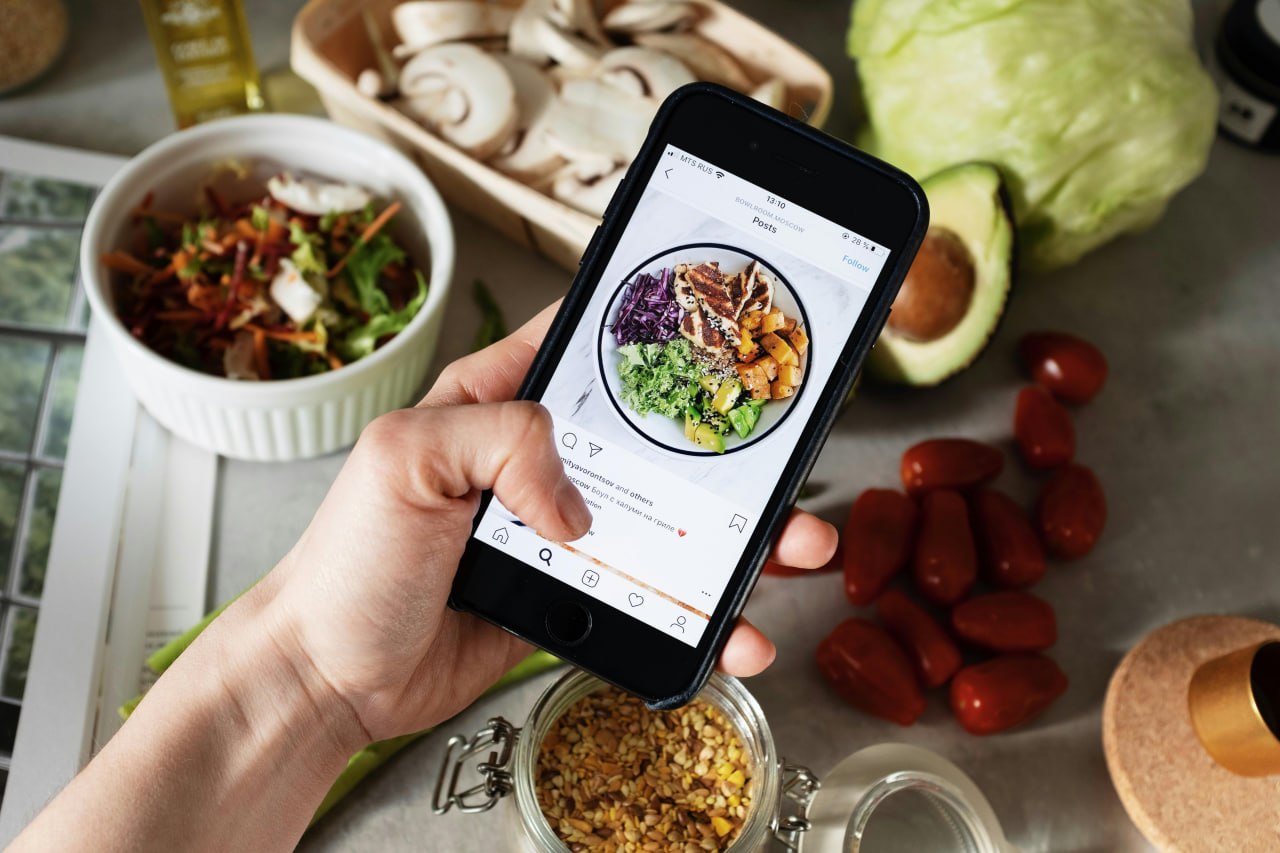
Many food diaries are really complaint logs. Entries such as "bloated again," "awful afternoon," or "cramping after lunch" record the outcome while barely recording the meals. That leaves one half of a two-part record, so weeks of diligent writing may still leave you without enough context to review possible food-symptom associations.
A food diary records what you ate and drank. A symptom tracker records what you felt, when it happened, and how bowel habits changed. Keeping both timelines together can make repeated associations easier to review than keeping either record alone.
Here's what each one does, what each leaves out, and how a combined record can support a more useful conversation with a clinician or dietitian.
What a food diary tracks
A food diary is exactly what it sounds like: a record of what you ate and drank, usually with timestamps. A basic one might just list meals. A useful one goes further, and includes:
- Specific ingredients, not just the dish name ("chicken stir-fry with garlic, soy sauce, broccoli," not just "stir-fry")
- Portion size, at least roughly
- Time of eating
- Where and how you ate (rushed at your desk vs. sitting down)
The value of a food diary is that it gives you the "input" side of the record. Without it, you may later have to reconstruct meals from memory when reviewing a symptom episode. What to track in a food diary covers the fields that can make a diary more useful than a simple list of meals.
Some templates focus on calories or weight rather than gastrointestinal patterns. They may not capture ingredients in a sauce, meal timing, bowel movements, or symptoms, which can matter when you later review the full context.
What a symptom tracker tracks
A symptom tracker is the other half: a record of how you felt, when symptoms appeared, and how bowel habits changed. A useful one can capture:
- Type of symptom (bloating, pain, urgency, diarrhea, constipation, nausea)
- Severity, ideally on a consistent scale
- Time the symptom started
- Duration
- Bowel movement timing and stool form
- Context that isn't food (stress level, sleep, menstrual cycle, medication)
Severity is worth defining consistently rather than relying on a vague sense of "bad." You might create personal anchors such as "noticeable but not disruptive," "hard to concentrate," and "needed to cancel plans." Using the same anchors may make your own entries easier to compare, but a home rating remains subjective and is not a diagnostic score. For stool form, the Bristol Stool Form Scale can provide a shared descriptive reference.
Symptoms can feel obvious in the moment and not worth writing down. Later, it may be difficult to remember whether Tuesday's bloating was mild or disruptive, or whether it began before or after lunch. Recording the details at the time reduces the amount you have to reconstruct later.
Why one without the other falls apart
Food diary alone
If you only log food, you have a detailed record of your diet but no recorded symptom timeline to compare it with. You might notice in hindsight, "I think I felt bad after Tuesday's lunch," but without a symptom entry, timing, and severity, there is too little information to examine whether the sequence repeats.
Symptom tracker alone
If you only log symptoms, you know when things changed but have no meal record to compare with them. Relevant timing varies with the symptom and suspected mechanism, and symptoms after eating are not necessarily caused by the most recent meal. A symptom-only graph cannot show whether the same foods, stressors, medicines, or other context repeatedly occurred around similar episodes.
Food can activate gut movement before the current meal has travelled through the intestines. A symptom soon after eating may relate to the gastrocolic response, earlier meals, stress, or another factor. Record the timing, but do not use a fixed window to declare one meal the cause.
How combining them supports pattern review
The value shows up when both records live in the same place, tagged with the same timestamps. That lets you ask a more careful question: what foods and other circumstances were recorded around this symptom, and does a similar sequence appear on other occasions?
If you're logging on paper and finding it hard to keep both timelines together, timestamp everything. Food and symptom entries are easier to compare when you can line them up by time rather than by date alone.
This is where digital tools can reduce manual cross-referencing. A notebook can hold both a food diary and a symptom log, but you have to compare dates and times yourself. An app can organize both records and highlight possible associations for review. Those associations may still reflect coincidence or confounding, so they are starting points for questions rather than proof of a trigger.
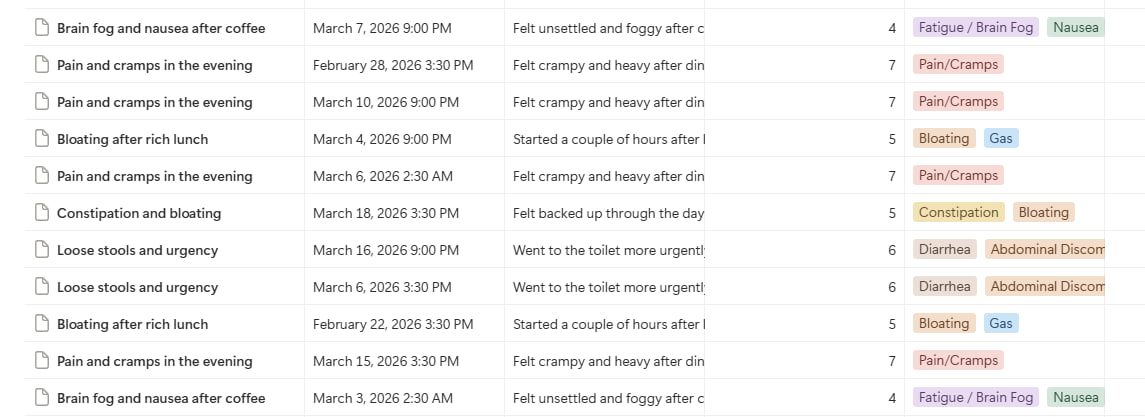
Track both, in one place
Find My Triggers logs meals and symptoms together by voice or text, with real timestamps, so the two timelines are already lined up when you need to look for a pattern.
Start Tracking Free →Once you have enough combined entries to look for repetition, the next question is how to judge a possible pattern without mistaking coincidence for cause. How to read your food diary and find patterns covers that step in full.
If you haven't settled on a format yet, how to track your food triggers walks through building a sustainable habit around both sides, without it turning into a second job. The format matters less than consistency and enough context to review meals, symptoms, bowel habits, and other relevant factors together.
A diary cannot diagnose IBS, food allergy, or food intolerance, and it cannot prove that a food caused a symptom. Use a repeated pattern as a hypothesis to discuss with a clinician or registered dietitian, especially before making broad or prolonged dietary restrictions. Seek medical assessment for rectal bleeding, black stools, anemia, unexplained weight loss, or other concerning symptoms. Sudden swelling of the mouth or throat, breathing difficulty, fainting, or suspected anaphylaxis needs emergency care. Do not deliberately re-challenge a suspected allergen on your own.
A food diary and a symptom tracker record two different parts of the same history: what you ate, and how you felt. Combined, timestamped records may help you notice repeated food-symptom associations that are hard to review in separate lists. They cannot diagnose a condition or prove that a food caused a symptom.
Sources



This article is for informational purposes and is not medical advice. Talk to your doctor before making dietary changes.
Start with the free 7-Day Trigger Discovery Challenge
Not ready for the app yet? Download the printable guide and work through 7 days of structured observation, with a few practical follow-up emails to help you stay on track.
- 20-page guide delivered immediately by email
- Daily meal, symptom, and lifestyle tracking pages
- Designed to help you spot early trigger patterns without overwhelm
Free - delivered straight to your inbox
🔒 No spam, we promise. Unsubscribe any time.
Or skip straight to the app - start tracking free →
Complete Tracker Kit - $29
The IBS Tracker Kit - Notion, Sheets & Printable
Everything you need to start tracking: Notion tracker, Google Sheets tracker, printable 30-day journal, FODMAP reference card, elimination diet protocol, and free AI analysis of your data.
Get the Tracker Kit →$29 one-time · Notion + Sheets + Printable · Free AI analysis included