
Understanding IBS
IBS and Anxiety: Breaking the Stress-Gut Cycle
IBS and anxiety feed each other in a genuine, two-way loop. Here's how that cycle works, what calms it, and how tracking helps you find which end to work on.

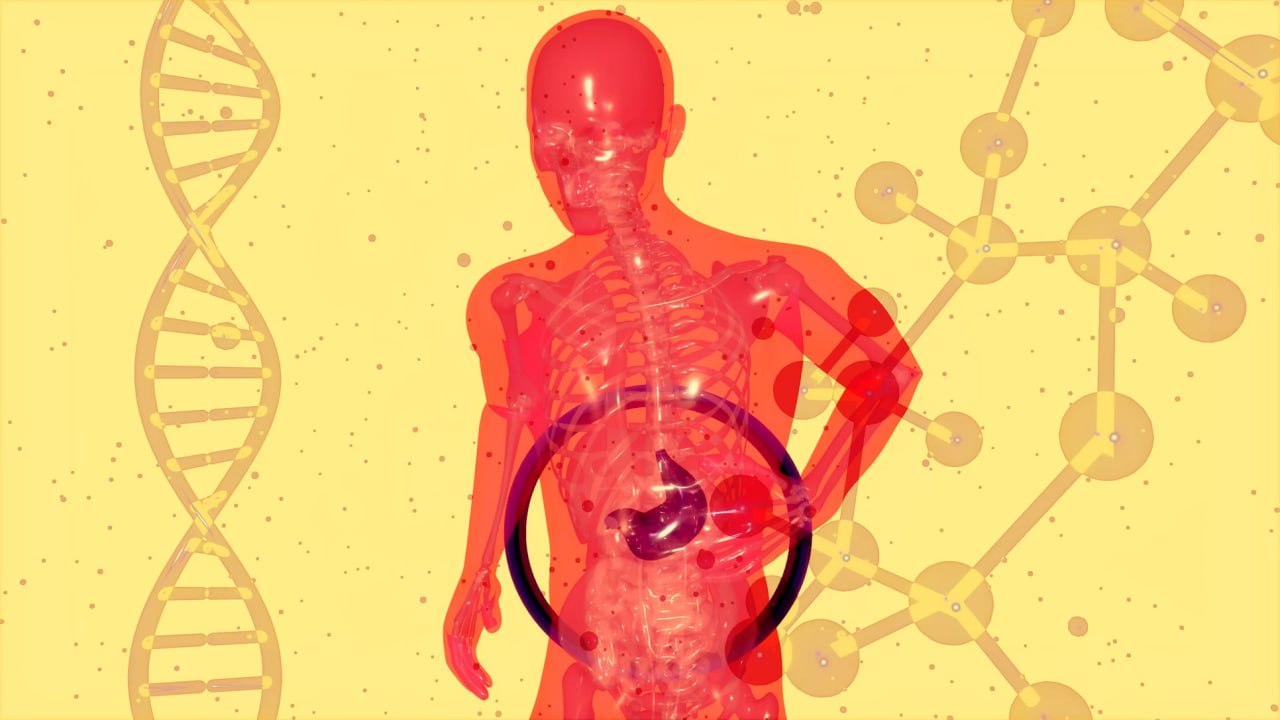
A rough week at work shows up in the stomach before it shows up anywhere else. A rough gut day produces anxiety about the next meal, the next meeting, the next flight. Treated as two problems that happen to coincide, this is intractable - you end up managing each one while the other keeps refilling it.
They're better understood as a single loop running in both directions. That's not a metaphor or a coping frame; it's the documented architecture of the gut-brain axis, and it changes which interventions are worth your time.
If you've noticed that your worst IBS flares cluster around your most anxious stretches, or that living with unpredictable symptoms has made you generally more anxious, you're not imagining a connection. It's well documented, and there's a real, practical case for tracking it.
The loop isn't metaphorical
The gut and the brain are wired together through the vagus nerve, the enteric nervous system, and a stream of hormonal signaling, and I've gone into that wiring in more depth in the gut-brain connection. What matters here is the direction of travel. Anxiety doesn't just sit in your head and coincidentally show up as a stomachache. It activates the same stress-response machinery that governs gut motility, gut permeability, and how sensitive your gut is to normal digestive activity. And the reverse holds too: living with an unpredictable, sometimes painful condition is anxiety-provoking, which feeds straight back into the same machinery.
Anxiety and depression are markedly more common in people with IBS than in the general population, and the relationship runs both directions rather than one condition simply causing the other.
This bidirectional pattern is exactly why IBS is classified as a disorder of gut-brain interaction rather than a purely digestive or purely psychological condition. Neither label fits on its own. Stress measurably worsens IBS symptoms through changes to motility, permeability, and visceral sensitivity, and anxiety is one of the clearest, most sustained forms that stress takes.
Why anxiety specifically, not just stress in general
Stress tends to be episodic: a deadline, an argument, a bad night. Anxiety is often more like weather than an event, a baseline level of anticipatory worry that doesn't need a specific trigger to be present. For IBS, that distinction matters because anticipatory anxiety has its own well-known feedback pattern:
- Worrying about having symptoms in a place without easy bathroom access can itself trigger the urgency it's worried about
- Catastrophizing about a flare, assuming the worst outcome before anything has actually happened, is associated with more severe reported symptoms
- Health anxiety specific to gut sensations (reading every twinge as a warning sign) keeps the nervous system in a heightened, watchful state that lowers the threshold for discomfort
- Avoidance behavior, skipping events or foods out of anticipatory fear, reduces exposure to the actual data that could show which fears are founded and which aren't
Interventions with evidence behind them
The good news is that this loop isn't just theoretical, it responds to treatment, and the treatments with the strongest evidence specifically target the gut-brain relationship rather than anxiety or gut symptoms in isolation.
Gut-directed hypnotherapy and CBT
A 2020 systematic review and network meta-analysis found that several psychological therapies produce meaningful, lasting improvement in IBS symptoms, with CBT-based approaches and gut-directed hypnotherapy having the largest evidence base among them. These aren't generic relaxation techniques. Gut-directed hypnotherapy specifically targets gut sensation and function, while CBT for IBS focuses on the catastrophizing and hypervigilance patterns that keep the anxious-gut loop running.
CBT and gut-directed hypnotherapy for IBS are increasingly available in shorter, structured formats, including app-based and telehealth delivery, which lowers the barrier to trying them compared with a long in-person course.
Reducing anticipatory anxiety through information
One of the quieter benefits of tracking is that it gives you something concrete to check anticipatory anxiety against. If you're worried a specific food or situation will trigger a flare, having actual data on how often that's true (and how often it isn't) is a different kind of reassurance than just telling yourself to stop worrying.
Regular, moderate movement
Anxiety and gut symptoms both respond to consistent, non-intense physical activity, which is worth understanding on its own terms if this is new territory for you. I've written more on exercise and IBS specifically, including how to time it around meals and flares.
Sleep
Poor sleep and anxiety are tightly linked, and poor sleep independently worsens next-day gut symptoms. If anxiety is keeping you up, that's not a separate problem from your IBS, it's part of the same loop, covered in more detail in IBS and sleep.
Tracking mood tells you which end of the loop to work on
Here's the practical problem with treating anxiety and IBS as one blurry cloud of bad days: it makes it hard to know where to actually put your effort. Some people find that food is doing most of the work and anxiety is a downstream consequence of unpredictable symptoms. Others find the reverse, that on calm days almost nothing bothers them, but the same meal on an anxious day causes real trouble.
You can't tell which camp you're in from memory alone, because a stressful week and a food-heavy week often overlap and get mentally lumped together as "a bad patch." Logging a simple mood or stress rating alongside your meals and symptoms, even a basic 1-5 scale, over several weeks starts to separate the two. If your worst symptom days line up with your most anxious days regardless of what you ate, that's useful information, and it points you toward gut-directed therapy or anxiety management as the higher-leverage move rather than another round of food elimination.

Recognizing an anxiety component to your IBS doesn't mean your symptoms are imagined or "just in your head." IBS is a real physiological condition. If anxiety is severe, persistent, or affecting your daily functioning on its own terms, that's worth discussing with a doctor or mental health professional directly, separate from the gut-symptom picture.
Food or stress? Find out which
Log meals, symptoms, and mood by voice or text. AI surfaces whether your flares track more closely with food or with stress, so you know where to focus first.
Start Tracking Free →Where to start if this feels overwhelming
You don't need to solve anxiety and IBS at the same time, and you don't need a perfect system before you start. Pick one axis to track for two weeks, food or mood, and see what shows up. If you're not sure which fields are worth logging in the first place, what to track in a food diary covers the basics, and adding a single daily stress or mood rating on top of that is usually enough to start seeing the shape of your own loop.
IBS and anxiety reinforce each other through a genuine, bidirectional gut-brain loop, not a one-way cause and effect. Gut-directed hypnotherapy and CBT have the strongest evidence for breaking that loop, alongside consistent movement and better sleep. Tracking mood alongside food and symptoms is the clearest way to see whether your own flares are driven more by what you eat or by anxiety, which tells you where to focus your effort first.
Sources
- Black CJ, Thakur ER, Houghton LA, Quigley EMM, Moayyedi P, Ford AC. "Efficacy of psychological therapies for irritable bowel syndrome: systematic review and network meta-analysis" - Gut 2020;69(8):1441-1451
- Zamani M, Alizadeh-Tabari S, Zamani V. "Systematic review with meta-analysis: the prevalence of anxiety and depression in patients with irritable bowel syndrome" - Alimentary Pharmacology & Therapeutics 2019;50(2):132-143
- Fond G et al. "Anxiety and depression comorbidities in irritable bowel syndrome" - European Archives of Psychiatry and Clinical Neuroscience 2014
- Rome Foundation. Rome IV Diagnostic Criteria - IBS as a disorder of gut-brain interaction (DGBI)



This article is for informational purposes and is not medical advice. Talk to your doctor before making dietary changes.
Start with the free 7-Day Trigger Discovery Challenge
Not ready for the app yet? Download the printable guide and work through 7 days of structured observation, with a few practical follow-up emails to help you stay on track.
- 20-page guide delivered immediately by email
- Daily meal, symptom, and lifestyle tracking pages
- Designed to help you spot early trigger patterns without overwhelm
Free - delivered straight to your inbox
🔒 No spam, we promise. Unsubscribe any time.
Or skip straight to the app - start tracking free →
Ready to find your triggers?
Track by voice. Let AI surface possible patterns.
Log meals and symptoms in seconds. AI structures your data and surfaces possible patterns, including delayed associations worth testing.
Start Tracking Free →Free to start · $59 one-time for full insights · No subscription