
Understanding IBS
IBS and Sleep: How Poor Sleep Worsens Symptoms
A bad night's sleep often predicts a bad gut day, not the other way around. Here's what the research shows about sleep and IBS, and how to track it.

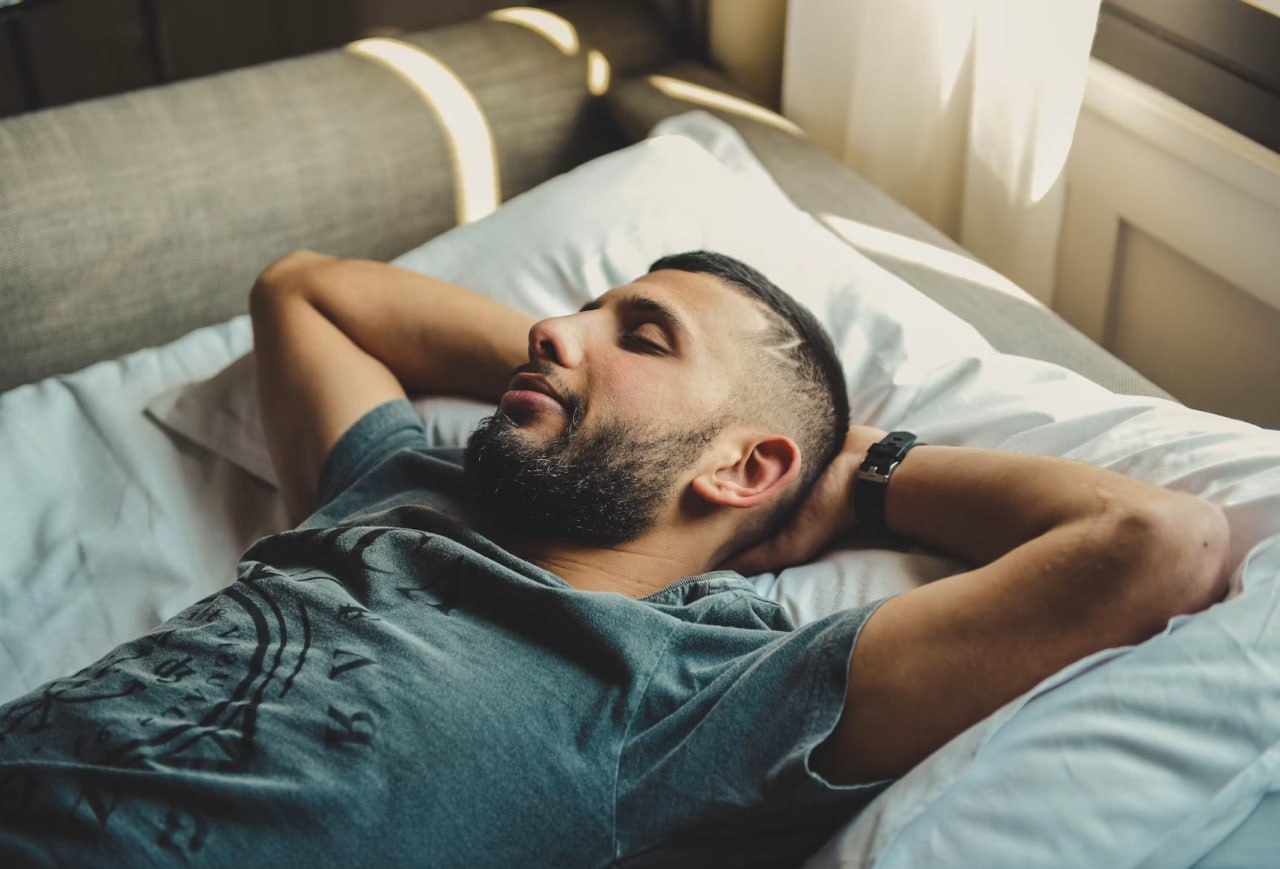
The intuitive story about IBS and sleep is that gut pain keeps you awake. That's true, and it's also the less useful half of the relationship.
When researchers have tracked both variables day by day, the stronger signal runs the other way: poor sleep quality predicts the next day's gut symptoms more reliably than gut symptoms predict that night's sleep. A rough night tends to be followed by a rough day, independent of what gets eaten in between.
That direction is what makes this worth reading about rather than just commiserating over. A symptom that follows your sleep is a symptom with a lever attached to it - and sleep is considerably easier to influence than visceral sensitivity is.
Which direction the relationship runs
A 2024 study using the experience sampling method (participants reported symptoms and mood on a smartphone app up to ten times a day for a week, alongside nightly ratings of sleep quality) found that poor subjective sleep quality predicted next-day abdominal pain and other gastrointestinal symptoms. Around two-thirds of the study's participants had sleep quality scores in the clinically disturbed range. Notably, the reverse relationship was weaker: how bad someone's gut symptoms were on a given day didn't reliably predict how poorly they slept that night.
An earlier study specifically in women with IBS found that both self-reported and objectively measured sleep quality predicted the severity of next-day abdominal pain and gastrointestinal symptoms, reinforcing that this isn't just a subjective impression.
That asymmetry is the useful part. If gut pain were simply keeping people awake, the fix would be limited to managing pain better at night. But if poor sleep is genuinely driving next-day symptoms, then improving sleep quality becomes a legitimate, independent target for managing IBS, not just a side effect to put up with.
Why sleep affects the gut this directly
Sleep and gut function share more machinery than it might seem. A few of the connecting threads:
- Sleep disruption affects the same stress-response system (the HPA axis) that governs gut motility and visceral sensitivity, so a short or fragmented night leaves that system more reactive the next day
- Poor sleep is linked to increased pain sensitivity generally, not just in the gut, which lines up with IBS's hallmark feature of heightened visceral sensitivity
- Sleep and mood are tightly linked, and mood and anxiety independently affect gut symptoms, covered in more depth in [IBS and anxiety](/articles/ibs-and-anxiety/), so a bad night can worsen gut symptoms partly through next-day irritability and stress as well as directly
- Circadian rhythm disruption affects the timing of gut motility itself, which is part of why irregular sleep schedules (not just short sleep) are also associated with worse symptoms
The trap of blaming last night's dinner
Here's where this connects back to food tracking specifically. If you eat something questionable in the evening, sleep badly, and then have a rough gut day, it's very easy to pin the whole thing on the food. Sometimes that's correct. But if the poor sleep itself was doing real work, independent of what you ate, then blaming the food alone means you'll keep cutting things from your diet that were never actually the problem, while the real driver, disrupted sleep, goes untouched.
This is a genuinely common source of false-positive triggers. A late, heavy meal that disrupts sleep can look exactly like a "trigger food" reaction the next day, when the mechanism was actually sleep disruption rather than digestion of that specific food.
If a food seems to only cause problems on nights when you also sleep badly, and seems fine when your sleep that night is normal, that's a meaningful clue that sleep disruption, not the food itself, may be the bigger driver.
Tracking sleep alongside food and symptoms
The practical fix isn't complicated, but it does require adding a field most food diaries skip. A simple nightly sleep quality rating (even just poor, okay, good) logged alongside your usual meals and symptoms lets you start separating three different pictures:
- Symptoms track closely with sleep quality regardless of what you ate, suggesting sleep is your dominant variable
- Symptoms track with food regardless of how you slept, suggesting food is doing most of the work for you specifically
- Symptoms are worst when a questionable food and poor sleep happen together, suggesting the two compound each other rather than acting independently
Each of those points somewhere different. If sleep is the dominant variable, working on sleep hygiene and consistent timing is likely to move the needle more than another round of food elimination. How to figure out which foods are triggering you covers the general process for isolating a real trigger, and adding a sleep field is one of the more overlooked ways to make that process more accurate.

What tends to help, practically
None of this requires an overhaul. A few changes with a reasonable evidence base for improving sleep quality specifically in people with digestive symptoms:
- Keep a consistent sleep and wake time, even on weekends, since circadian regularity itself appears to matter, not just total hours slept.
- Avoid large, late meals, particularly fatty or spicy ones, since they can disrupt sleep directly through reflux or gut discomfort, independent of any specific "trigger."
- Wind down without screens for the last 30-60 minutes before bed, since light exposure and mental stimulation both delay sleep onset.
- Address anxiety directly if it's keeping you up, since anxious rumination at bedtime is one of the more common and fixable causes of fragmented sleep in people with IBS.
Persistent insomnia, very fragmented sleep, or symptoms like loud snoring and daytime exhaustion that suggest a sleep disorder such as sleep apnea are worth discussing with a doctor directly. These are treatable conditions in their own right, and neither food elimination nor gut-focused strategies will fix a sleep disorder underneath.
Line your gut days up against your nights
Log meals, symptoms, and sleep quality by voice or text. AI surfaces whether your bad days line up with what you ate, how you slept, or both.
Start Tracking Free →Poor sleep quality reliably predicts worse next-day IBS symptoms, and the relationship is stronger in that direction than gut symptoms disrupting sleep. A late meal that disrupts sleep can look like a food trigger the next day when sleep disruption was the bigger driver. Logging a simple sleep quality rating alongside food and symptoms is the clearest way to see whether sleep, food, or the combination of both is really behind your bad days.
Sources
- Topan R et al. "Poor Subjective Sleep Quality Predicts Symptoms in Irritable Bowel Syndrome Using the Experience Sampling Method" - American Journal of Gastroenterology 2024;119(1):155-164
- Buchanan DT et al. "Sleep Measures Predict Next-Day Symptoms in Women with Irritable Bowel Syndrome" - Journal of Clinical Sleep Medicine 2014;10(9):1003-1009
- Rome Foundation. Rome IV Diagnostic Criteria - IBS as a disorder of gut-brain interaction (DGBI)


This article is for informational purposes and is not medical advice. Talk to your doctor before making dietary changes.
Start with the free 7-Day Trigger Discovery Challenge
Not ready for the app yet? Download the printable guide and work through 7 days of structured observation, with a few practical follow-up emails to help you stay on track.
- 20-page guide delivered immediately by email
- Daily meal, symptom, and lifestyle tracking pages
- Designed to help you spot early trigger patterns without overwhelm
Free - delivered straight to your inbox
🔒 No spam, we promise. Unsubscribe any time.
Or skip straight to the app - start tracking free →
Ready to find your triggers?
Track by voice. Let AI surface possible patterns.
Log meals and symptoms in seconds. AI structures your data and surfaces possible patterns, including delayed associations worth testing.
Start Tracking Free →Free to start · $59 one-time for full insights · No subscription