
Understanding IBS
Fructose Malabsorption Explained
Fructose malabsorption happens when your gut can't fully absorb fructose, so the excess ferments in the colon. Here's the mechanism and the foods involved.

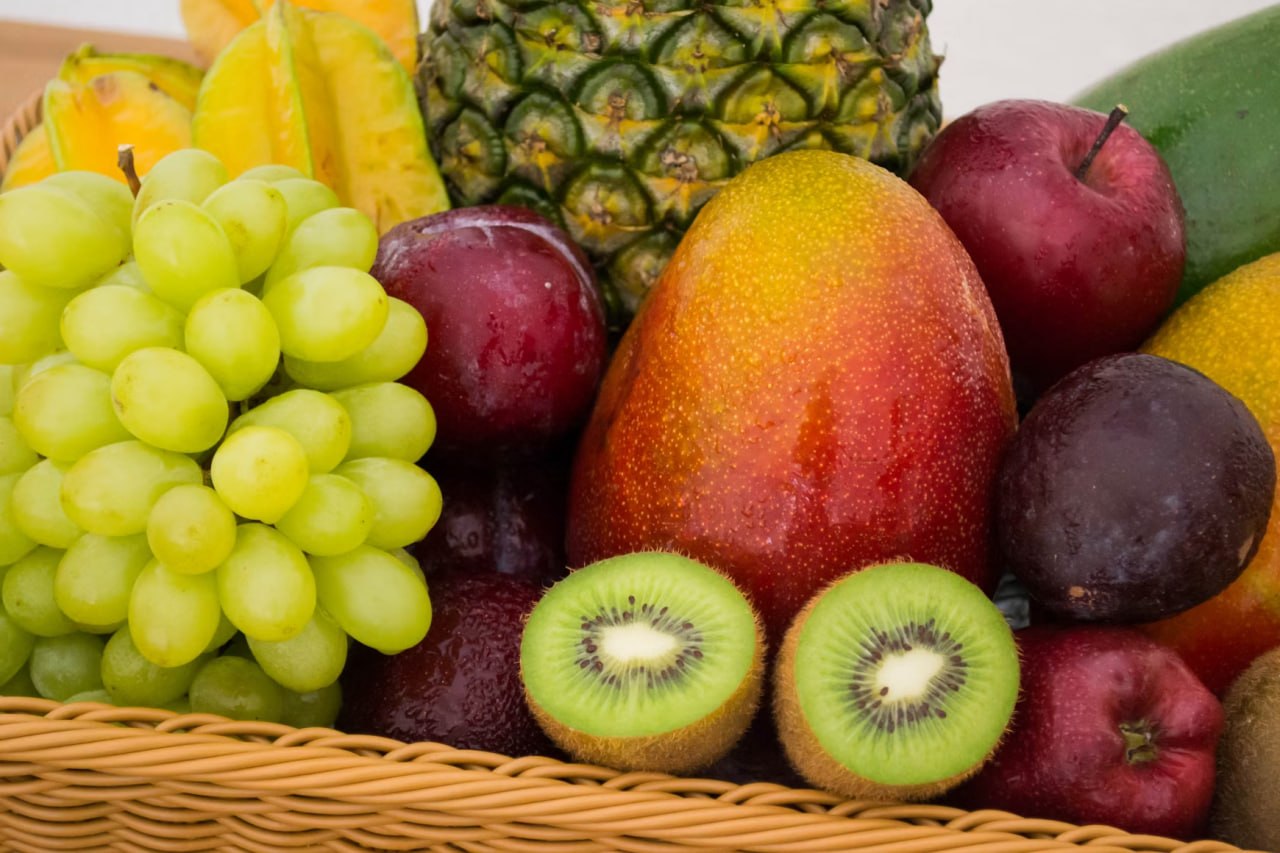
Fruit is the category most likely to defeat an otherwise well-kept food diary, because the results read as contradictory. Grapes fine, an apple not. A handful of strawberries fine, a mango decidedly not. A teaspoon of honey mattering far more than a teaspoon of anything should.
Those results stop looking random once you sort fruit by a different property than the one that seems obvious. What matters isn't how sugary a fruit tastes or how much of it you ate, but the ratio of fructose to glucose it contains. Glucose actively helps the gut absorb fructose alongside it; when a food carries substantially more fructose than glucose, the surplus travels on to the colon unabsorbed and behaves like any other fermentable carbohydrate.
If certain fruits and sweeteners reliably cause bloating, gas, or diarrhea while others don't, fructose malabsorption is worth understanding, because the mechanism is specific and the pattern is predictable once you know what to look for.
The GLUT5 bottleneck
Fructose is absorbed in the small intestine mainly through a transporter called GLUT5, which is dedicated specifically to fructose and has a limited capacity. Unlike glucose, which is absorbed efficiently and in large amounts, GLUT5 saturates relatively easily. Research using standard fructose load testing has found that a meaningful share of healthy adults, up to about 60% in some studies, cannot fully absorb a 40 gram dose of fructose taken on its own. Worth keeping in perspective: 40 grams is a deliberately large test dose, far more fructose than a typical serving of fruit delivers, so that figure describes the limits of the transport system, not how many people react to normal portions.
There's a second pathway. Glucose and fructose can be co-transported together by a different transporter (GLUT2) when they're present in roughly equal amounts, which is why foods with balanced glucose-to-fructose ratios, like most whole fruit, are absorbed more easily than foods where fructose dominates, like honey or agave.
Fructose that isn't absorbed in the small intestine travels on to the colon, where gut bacteria ferment it, producing hydrogen, carbon dioxide, methane, and short-chain fatty acids. That fermentation, along with the osmotic pull of unabsorbed sugar drawing water into the bowel, is what produces the bloating, gas, and diarrhea people associate with fructose malabsorption.
Which foods actually carry excess fructose
The distinction that matters isn't "contains fructose," since almost all fruit does. It's whether fructose exceeds glucose in that specific food, because a glucose-heavy or balanced food is absorbed through the backup pathway even if total fructose looks similar on paper.
- High excess-fructose foods: honey, agave syrup, mango, apples, pears, watermelon, high-fructose corn syrup, and many dried fruits
- Foods usually fine in typical portions because fructose and glucose are balanced: bananas, most citrus, strawberries, blueberries, grapes
- Portion matters even within "safe" foods, since a large serving of a fructose-heavy fruit can still exceed your absorption capacity even if a small serving doesn't
- Combining several excess-fructose foods in one sitting adds up, the same way FODMAP stacking works with other fermentable carbohydrates
Why this is a FODMAP category, not a separate diet
Excess fructose is the "M," for monosaccharide, in FODMAP. That means the low-FODMAP diet already accounts for it, and the food lists used for low-FODMAP eating and for managing fructose malabsorption largely overlap. If you've already gone through the low-FODMAP diet, you've likely already been managing your fructose exposure without necessarily labeling it that way.
This overlap is useful. It means someone who reacts specifically to excess-fructose foods within an otherwise low-FODMAP diet has a narrower, more specific pattern than general FODMAP sensitivity, which can make identifying the exact culprit a bit more precise once you're paying attention to it.
It also explains why some people notice their reaction to fruit changes depending on what else is on the plate. A fructose-heavy fruit eaten alongside a starchy, glucose-rich food can be tolerated better than the same fruit eaten alone, because the extra glucose gives the backup GLUT2 pathway something to work with. That's a genuinely different mechanism from simply "eating less fruit," and it's part of why blanket fruit avoidance is rarely the most useful response.
How it's actually identified
Clinically, fructose malabsorption is usually assessed with a hydrogen breath test, where you drink a measured fructose solution and your breath is tested for hydrogen produced by colonic fermentation over the following hours. That test isn't available or practical for everyone, and outside of a clinical setting, structured elimination and reintroduction does much the same job:
- Reduce high excess-fructose foods (honey, mango, apples, pears, agave, high-fructose corn syrup) for a couple of weeks and track your baseline symptoms.
- Reintroduce one excess-fructose food at a time, in a measured portion, and log the timing and severity of any reaction over the following several hours.
- Compare that to a balanced-ratio fruit eaten in a similar portion, like a banana or grapes, to see whether the reaction is specific to the fructose-heavy foods or more general.
- Once a pattern shows up, test portion size specifically, since many people can tolerate a small amount of a fructose-heavy food even if a large serving causes trouble.
Pairing a fructose-heavy food with a source of glucose, like eating mango alongside something starchy, can sometimes improve tolerance by giving the GLUT2 co-transport pathway more glucose to work with. It's worth testing whether that makes a real difference for you specifically.
Because the difference between a tolerated fruit and a triggering one often comes down to a specific gram amount rather than a whole food category, this is a pattern that's hard to hold in memory accurately. Logging portion size alongside symptom timing is what turns "fruit is unpredictable" into an actual, usable threshold.
Dose patterns, not blanket bans
Log meals and symptoms by voice or text, including exact foods and portions. AI helps surface dose-dependent patterns like fructose load, not just a blanket "fruit is a trigger" conclusion.
Start Tracking Free →If sugar-free products or sweeteners are also part of your pattern, it's worth reading about sugar alcohols and diarrhea, a related but mechanistically distinct source of the same kind of fermentation-driven symptoms.
Not the same as hereditary fructose intolerance
Fructose malabsorption is a common, generally manageable digestive sensitivity. It's a different condition from hereditary fructose intolerance (HFI), a rare, serious genetic metabolic disorder present from infancy that requires strict, medically supervised avoidance of fructose entirely. If digestive symptoms after fructose are new in adulthood, mild to moderate, and clearly dose-dependent, that pattern fits fructose malabsorption, not HFI. A doctor can help clarify which applies if there's any doubt.
See a doctor rather than self-managing if symptoms are severe, if there's unintentional weight loss, blood in the stool, or symptoms that don't fit a clear dose-dependent pattern. These warrant investigation before assuming fructose malabsorption is the explanation.
Fructose malabsorption happens when the GLUT5 transporter's limited capacity is exceeded, letting unabsorbed fructose ferment in the colon and cause bloating, gas, and diarrhea. It's specifically about foods where fructose exceeds glucose, not fruit in general, and it's the same monosaccharide category already addressed by the low-FODMAP diet. Structured elimination and reintroduction, tracking portion size and food pairing, is the practical way to confirm your own pattern.
Sources
- Fedewa A, Rao SS. "Dietary fructose intolerance, fructan intolerance and FODMAPs" - Current Gastroenterology Reports 2014;16(1):370
- Skoog SM, Bharucha AE. "Dietary fructose and gastrointestinal symptoms: a review" - American Journal of Gastroenterology 2004;99(10):2046-2050
- Ebert K, Witt H. "Fructose malabsorption" - Molecular and Cellular Pediatrics 2016;3:10



This article is for informational purposes and is not medical advice. Talk to your doctor before making dietary changes.
Start with the free 7-Day Trigger Discovery Challenge
Not ready for the app yet? Download the printable guide and work through 7 days of structured observation, with a few practical follow-up emails to help you stay on track.
- 20-page guide delivered immediately by email
- Daily meal, symptom, and lifestyle tracking pages
- Designed to help you spot early trigger patterns without overwhelm
Free - delivered straight to your inbox
🔒 No spam, we promise. Unsubscribe any time.
Or skip straight to the app - start tracking free →
Ready to find your triggers?
Track by voice. Let AI surface possible patterns.
Log meals and symptoms in seconds. AI structures your data and surfaces possible patterns, including delayed associations worth testing.
Start Tracking Free →Free to start · $59 one-time for full insights · No subscription