
Understanding IBS
Carbonated Drinks and Bloating: What's Going On
Soda, sparkling water, seltzer: why do fizzy drinks bloat some people and not others? Here's the mechanism and how to test your own tolerance.

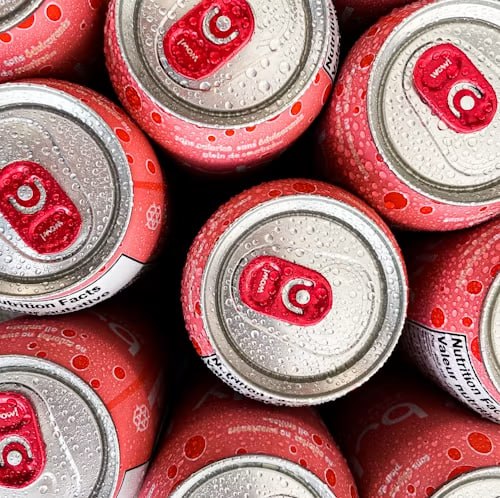
Plain sparkling water looks like the safe fizzy drink. No sugar, no caffeine, no sweetener - nothing on the ingredients list that appears on any trigger list.
Plenty of people find it bloats them roughly as much as a soda does, occasionally more. That result seems contradictory only if you assume the trouble is dissolved in the drink. The bubbles are the drink's own contribution, and they arrive whether or not anything else does.
If carbonated drinks reliably leave you distended, uncomfortable, or gassy, even the "clean" ones, this is what's happening, and why diet soda doesn't necessarily solve it.
The bubbles are the mechanism, not just the sugar
Carbonation is dissolved carbon dioxide gas. When you drink something carbonated, that CO2 doesn't stay dissolved, it comes out of solution in your stomach, the same reaction that makes a shaken can fizz over when you open it. That released gas has to go somewhere: some of it gets belched back up, and some of it moves on into the intestine, adding to the gas load your gut already has to deal with.
This is mechanically similar to aerophagia, the swallowing of excess air that happens with fast eating, talking while eating, or drinking through a straw. Carbonated drinks essentially deliver a dose of gas directly into your digestive tract on purpose, gas that then has to distend the stomach and intestine on its way through. The volume matters too, larger servings introduce more dissolved CO2 and produce more noticeable distension than a small glass.
A small study found carbonated water actually improved some dyspepsia and constipation symptoms in certain patients, likely by stimulating gastric activity. The relationship between carbonation and the gut isn't purely negative, it's individual, which is exactly why testing your own response matters more than a blanket rule.
For most people without a sensitive gut, this gas passes through largely unnoticed. For people with IBS, the visceral hypersensitivity that's a core feature of the condition means the same volume of gas registers as bloating, pressure, or pain rather than nothing at all.
So why does sugar-free, "clean" fizzy water still cause problems for some people?
This is the part that trips people up, because it seems like removing sugar should remove the problem. Two separate things are usually going on:
- The carbonation itself is doing most of the mechanical work, gas distension happens whether or not there's sugar in the drink, so plain sparkling water can bloat you just as much as soda
- "Diet" and "zero sugar" drinks commonly substitute sugar alcohols or other sweeteners (sorbitol, mannitol, xylitol, erythritol) which are themselves poorly absorbed in the small intestine and can be fermented by gut bacteria, adding a second, separate source of gas on top of the carbonation
- Some diet sodas use sweeteners that don't ferment the same way but can still have a mild osmotic effect in sensitive guts, pulling water into the intestine
- Temperature and speed of drinking change how much CO2 escapes before it reaches your stomach, drinking a cold, fast-poured fizzy drink quickly tends to deliver more gas than sipping a warmer, flatter one slowly
If you've noticed that diet soda bloats you more than regular soda, sugar alcohols in the sweetener blend are a common reason, they're a well-documented FODMAP category (polyols) in their own right, entirely separate from the carbonation.
Serving temperature plays a role too, independent of pour speed or volume. Cold liquids hold dissolved CO2 more readily than warm ones, so a cold carbonated drink releases gas more gradually in your stomach as it warms, while a warm, flat drink has already released most of its CO2 before you even take a sip.
Carbonated alcohol and fermented fizzy drinks add their own layers
Beer, sparkling wine, and hard seltzers are worth calling out separately, because they stack carbonation on top of alcohol's own gut effects, and in beer's case, on top of the fermentable carbohydrates in grain. Beer is carbonated, often made from wheat or barley, and alcohol itself can speed intestinal transit and irritate the gut lining, so a bloated, gassy reaction to beer may reflect several overlapping mechanisms rather than one. Alcohol's effect on IBS is worth reading on its own if beer or wine reliably cause problems beyond what plain carbonation would explain.
Kombucha and other naturally fermented fizzy drinks add a further wrinkle. They're carbonated through fermentation, so they deliver dissolved CO2 like any other fizzy drink, but depending on the tea, sugar, and fermentation time used, they can also contain residual sugars, trace alcohol, and sometimes leftover fermentable carbohydrates. A "healthier" fizzy drink isn't automatically a gut-neutral one, so it's worth testing it the same deliberate way you'd test soda rather than assuming it's safe by reputation.
Bloating after carbonated drinks is usually mechanical and harmless, but see a doctor if it's accompanied by severe or worsening abdominal pain, unintentional weight loss, vomiting, blood in your stool, bloating that doesn't ease after a bowel movement, or new symptoms after age 50. These aren't typical of simple gas distension and deserve evaluation to rule out other causes.
Testing your own tolerance
Because carbonation and sweeteners are two different mechanisms, the useful test is to separate them rather than lump "fizzy drinks" together as one category:
- Try a still (non-carbonated) version of your usual drink first, plain water instead of sparkling, regular soda gone flat, to establish your baseline without the gas component.
- On a separate day, try plain sparkling water with no sweeteners at all, to isolate the carbonation effect specifically.
- On another day, try a sugar-alcohol-sweetened diet drink, still or flat if possible, to isolate the polyol effect.
- Note the timing of symptoms relative to each, gas distension from carbonation tends to show up fast, within minutes to an hour, while sugar alcohol fermentation often takes longer, more in line with other FODMAP-linked bloating.

Doing this from memory is hard, because "I had a soda and felt bloated" doesn't tell you which of two or three overlapping mechanisms was responsible. Logging what you drink alongside symptom timing is what separates "it's the bubbles" from "it's the sweetener" from "it's something else entirely that happened to coincide with the drink."
Is it the fizz or the sweetener?
Log drinks by voice or text, carbonated or not, sweetened or not, and let AI spot whether it's the fizz, the sweetener, or something else driving your bloating.
Start Tracking Free →If it turns out it's not (just) the carbonation
Bloating that shows up broadly after eating, not just after fizzy drinks, is often a separate and wider pattern worth understanding on its own terms, since gas distension, slowed transit, and food-specific fermentation can all overlap and look similar from the outside. Our full guide to bloating after eating maps out the other common causes so you can work out which branch applies to you.
Letting a carbonated drink go flat (stirring it or leaving it open for a while) before drinking removes most of the dissolved CO2 while keeping the flavor, a simple way to test whether the bubbles specifically are your problem.
Carbonated drinks bloat sensitive guts mainly through the mechanical release of dissolved CO2 gas, similar to swallowing air, which is why plain sparkling water can bloat you as much as soda. Diet and zero-sugar versions often add a second, separate mechanism: sugar alcohol sweeteners that ferment in the gut. Testing still versus sparkling, and sweetened versus unsweetened, separately is the clearest way to find out which mechanism is driving your symptoms.
Sources
- Malagelada JR et al. "Bloating and abdominal distension: old misconceptions and current knowledge" - American Journal of Gastroenterology 2017;112:1221-1231
- Monash University FODMAP Diet - polyol (sugar alcohol) fermentation and FODMAP categories
- Mearin F, Lacy BE et al. "Bowel Disorders" - Gastroenterology 2016;150:1393-1407 (Rome IV diagnostic framework for IBS)


This article is for informational purposes and is not medical advice. Talk to your doctor before making dietary changes.
Start with the free 7-Day Trigger Discovery Challenge
Not ready for the app yet? Download the printable guide and work through 7 days of structured observation, with a few practical follow-up emails to help you stay on track.
- 20-page guide delivered immediately by email
- Daily meal, symptom, and lifestyle tracking pages
- Designed to help you spot early trigger patterns without overwhelm
Free - delivered straight to your inbox
🔒 No spam, we promise. Unsubscribe any time.
Or skip straight to the app - start tracking free →
Ready to find your triggers?
Track by voice. Let AI surface possible patterns.
Log meals and symptoms in seconds. AI structures your data and surfaces possible patterns, including delayed associations worth testing.
Start Tracking Free →Free to start · $59 one-time for full insights · No subscription