
Understanding IBS
Spicy Food and Stomach Pain: Is It Really the Cause?
Spicy food and stomach pain often go together, but capsaicin isn't always the real culprit. Here's the receptor behind the burn and how to test it.

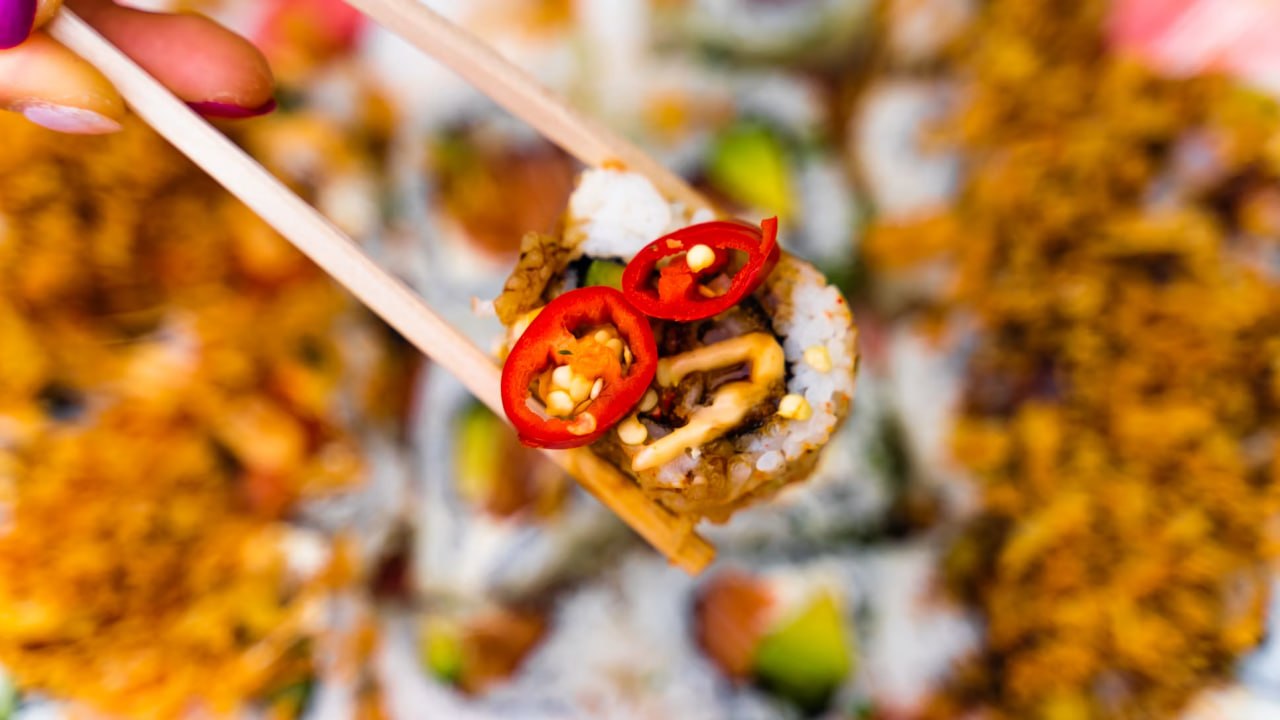
Spicy food is the trigger everyone assumes is obvious. Eat something hot, feel pain, blame the spice.
Then look at what the spicy part arrived with. A curry built on onion and garlic. Hot wings drenched in butter. Chilli carrying a full serving of beans. Almost nothing anyone eats is spicy and nothing else, which means "spicy food" is one of the least precise entries a food diary can contain.
If spicy meals reliably cause you pain, this is worth digging into properly, because there's a real receptor-level mechanism behind capsaicin's effect on the gut, and there's also a very common reason the spice gets blamed for something else entirely.
Capsaicin and the TRPV1 receptor
Capsaicin, the compound that makes chili peppers hot, works by activating a receptor called TRPV1, found on nerve endings throughout the digestive tract, not just on your tongue. TRPV1 is a pain-signaling receptor that responds to heat and certain chemical irritants, and capsaicin binds to it directly. That's why chili can produce a genuine burning sensation as it moves through the esophagus, stomach, and intestines, not only in your mouth.
Research using rectal capsaicin application has found that people with IBS show heightened sensitivity to this stimulation compared to people without IBS, meaning the same dose of capsaicin produces a stronger pain response in an IBS gut. A controlled study giving chili-containing meals to people with diarrhea-predominant IBS found that it produced significantly more abdominal pain and burning than a matched non-spicy meal, specifically in the IBS-D group.
TRPV1 receptors are the same receptor family activated by heat, which is part of why a truly "hot" curry can feel like a temperature sensation internally, not just a chemical one. Your gut nerves interpret capsaicin similarly to how your skin interprets a burn.
This is a real, receptor-level effect, not an exaggeration or a coincidence. Visceral hypersensitivity, the hallmark feature of IBS where normal gut signals get amplified into pain, applies to capsaicin the same way it applies to gas, stretching, and distension from other causes.
Why it's sometimes not really the spice
Here's the part that trips a lot of people up. Spicy dishes are rarely just capsaicin. A hot curry often carries onion and garlic (high in fructans), a heavy cream or oil base (high fat, which independently triggers the gastrocolic reflex), and a large overall portion. Hot wings usually come with butter-based sauce and a fried component. Chili often includes beans, a classic gas-producing food in its own right.
So when a spicy meal causes pain, three things are usually tangled together:
- The capsaicin itself, acting directly on TRPV1 receptors in the gut
- Other high-FODMAP or high-fat ingredients that frequently accompany spicy dishes, like onion, garlic, or a rich sauce
- Overall meal size, since spicy restaurant dishes are often larger portions than a typical home-cooked meal
- Alcohol, if the spicy meal was paired with beer or a cocktail, which independently affects gut motility
Separating these matters because the fix is completely different depending on which one is driving your pain. If it's genuinely the capsaicin, a milder version of the same dish should help. If it's the onion and garlic, a "mild" version with the same aromatics will still cause trouble.
Tolerance really can build up over time
One detail that surprises people is that regular, repeated capsaicin exposure tends to lower the intensity of the reaction over time, and this has been tested rather than merely assumed. In a randomized crossover trial, six weeks of daily chili in people with diarrhea-predominant IBS reduced post-meal abdominal burning and raised the rectal sensory threshold - the opposite of what you'd expect if chili simply sensitised an already-sensitive gut. It reflects how TRPV1 receptors respond to sustained stimulation, becoming less reactive to the same dose. It's part of why people who eat spicy food regularly often report needing progressively hotter dishes to get the same effect, while someone who eats chili rarely can get a strong reaction from a level of heat a regular chili-eater barely notices.
That cuts both ways for someone with IBS. It means an occasional very spicy meal is more likely to provoke a strong reaction than the same dish eaten by someone with a built-up tolerance, which is worth factoring in if you're trying to judge your reaction against a friend's at the same meal. It also means gradually working with smaller amounts of heat, rather than an all-or-nothing approach, can shift your own baseline over time, though that's a slow process and not a fix for an active flare.
Capsaicin isn't fully broken down during digestion, which is why it can produce a burning sensation on the way out as well as the way in. That's a normal, if unpleasant, direct TRPV1 effect rather than a sign of damage or a separate problem.
A simple way to self-test which part is the problem
Because the ingredients in a typical spicy dish overlap so heavily with other common triggers, a real self-test is more useful than guessing:
- Pick a dish you usually react to, and note every major component, not just "spicy."
- On one occasion, try a version of the same dish made mild but with the same other ingredients (onion, garlic, oil, portion size) unchanged.
- On a separate occasion, try a genuinely spicy version made without the other usual suspects, smaller portion, no onion or garlic, lighter on fat.
- Compare how each version goes, ideally a few days apart so one reaction doesn't blur into the next.
Restaurant "mild" often isn't actually low in the other ingredients that tend to travel with spice, onion and garlic in particular. A home-cooked test gives you far more control over what's actually changing between the two versions.
This kind of side-by-side comparison is exactly the sort of thing that's nearly impossible to keep straight from memory, especially once you've eaten a few more meals in between. Logging what's in a dish, not just "spicy" as a category, alongside symptom timing is what makes figuring out your real food triggers possible instead of a permanent guessing game.
Separate the chilli from the onion
Log meals and symptoms by voice or text, including specific ingredients like onion, garlic, and spice level. AI helps separate capsaicin from the ingredients that usually travel alongside it.
Start Tracking Free →If stomach pain after eating shows up with foods beyond spicy dishes too, it's worth reading the broader picture of stomach pain and cramps after eating, since capsaicin is one of several distinct mechanisms that can produce a similar ache.
When pain is more than a spice reaction
Mild to moderate discomfort after a genuinely hot meal is a normal, if uncomfortable, response for a sensitive gut. But severe pain, pain that lasts well beyond the meal, or pain accompanied by other symptoms deserves a closer look rather than automatic "spicy food" blame.
See a doctor if stomach pain is severe, persistent, accompanied by vomiting, fever, blood in the stool, or unintentional weight loss, or if it doesn't settle within a reasonable time after eating. These warrant evaluation rather than being assumed to be a spice reaction.
Capsaicin activates TRPV1 pain receptors throughout the digestive tract, and IBS guts show a measurably stronger response to it, so spicy food can be a genuine trigger. But spicy dishes usually carry other common triggers too, onion, garlic, fat, and large portions, so a mild-versus-hot self-test with everything else held constant is the only reliable way to know whether the spice itself is your actual problem.
Sources
- Gonlachanvit S, Mahayosnond A, Kullavanijaya P. "Effects of chili on postprandial gastrointestinal symptoms in diarrhoea predominant irritable bowel syndrome: evidence for capsaicin-sensitive visceral nociception hypersensitivity" - Neurogastroenterology & Motility 2009;21(1):23-32
- Schmulson MJ, Valdovinos MA, Milke P. "Chili pepper and rectal hyperalgesia in irritable bowel syndrome" - American Journal of Gastroenterology 2003;98(5):1214-1215
- Monash University FODMAP Diet - fructan content of onion and garlic and their role as common IBS triggers
- Effects of Chili Treatment on Gastrointestinal and Rectal Sensation in Diarrhea-predominant Irritable Bowel Syndrome: A Randomized, Double-blinded, Crossover Study - Journal of Neurogastroenterology and Motility 2014


This article is for informational purposes and is not medical advice. Talk to your doctor before making dietary changes.
Start with the free 7-Day Trigger Discovery Challenge
Not ready for the app yet? Download the printable guide and work through 7 days of structured observation, with a few practical follow-up emails to help you stay on track.
- 20-page guide delivered immediately by email
- Daily meal, symptom, and lifestyle tracking pages
- Designed to help you spot early trigger patterns without overwhelm
Free - delivered straight to your inbox
🔒 No spam, we promise. Unsubscribe any time.
Or skip straight to the app - start tracking free →
Ready to find your triggers?
Track by voice. Let AI surface possible patterns.
Log meals and symptoms in seconds. AI structures your data and surfaces possible patterns, including delayed associations worth testing.
Start Tracking Free →Free to start · $59 one-time for full insights · No subscription