
Understanding IBS
Bloated After Eating Bread or Pasta? Why It Happens
Bloated after eating bread or pasta? Learn how wheat fructans, portion size, meal ingredients, celiac disease, and wheat allergy can overlap, and what to discuss with a clinician.

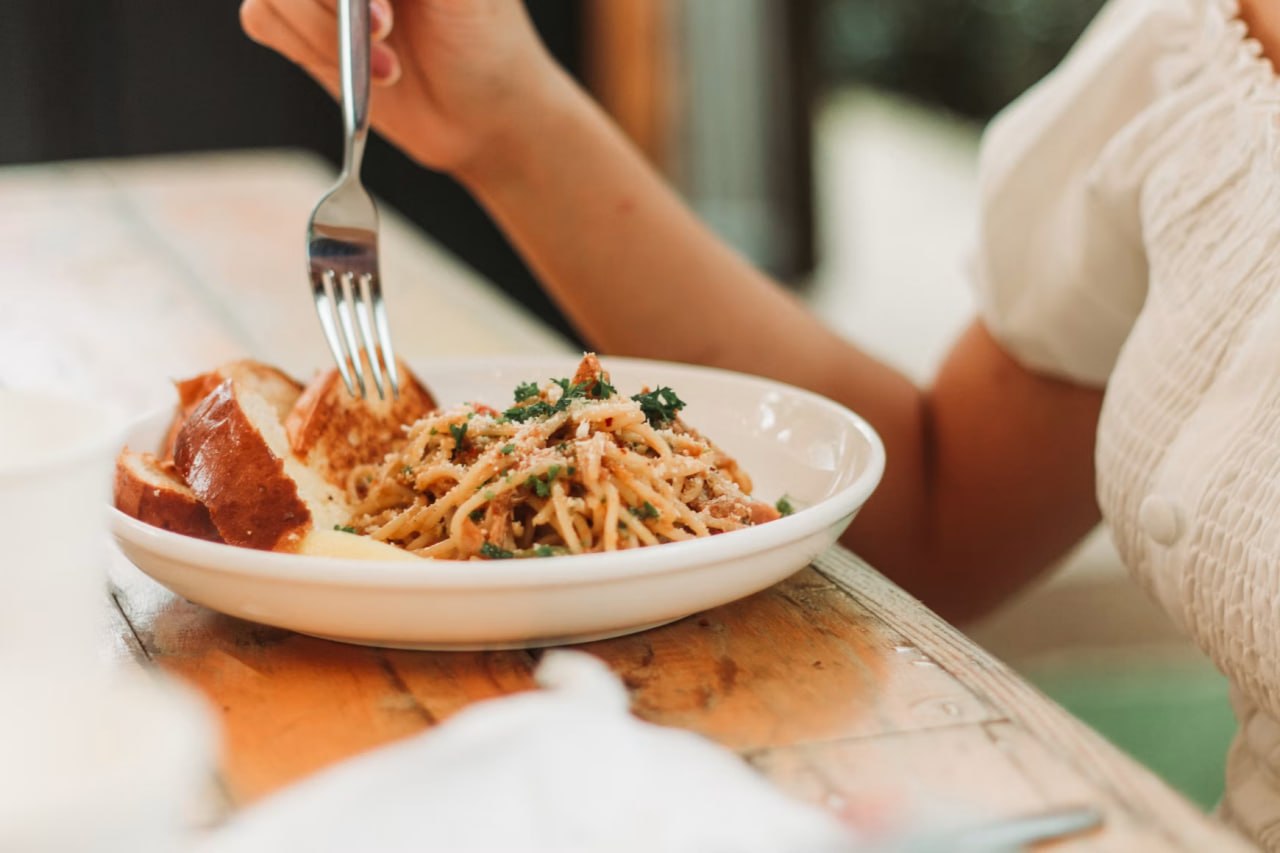
A bowl of pasta or a few slices of bread can be followed by uncomfortable bloating. It is easy to blame gluten, but the meal contains several variables, and symptoms after eating do not identify the cause by themselves.
Possible explanations include wheat fructans, portion size, garlic or onion in the meal, celiac disease, wheat allergy, another wheat-related condition, or a cause unrelated to wheat. These possibilities do not all call for the same response.
Why bread or pasta may be followed by bloating
Celiac disease or another wheat-related condition. In celiac disease, gluten triggers an autoimmune response. Diagnosis should come before starting a strict gluten-free diet because reducing gluten can make testing less accurate. Non-celiac gluten sensitivity is less well understood and is considered only after celiac disease and wheat allergy have been evaluated.
Fructans, a FODMAP. Wheat contains fructans, a fermentable carbohydrate that can contribute to gas and bloating in some people with IBS. Because wheat foods contain both gluten and fructans, symptoms after eating them do not identify which component, if either, contributed. One controlled trial found higher group-average symptoms after fructans than gluten in selected people with self-reported gluten sensitivity, but that does not establish the cause for an individual. I cover the distinction in a dedicated article on gluten versus FODMAPs.
Portion and the rest of the meal. A large pasta meal may also contain garlic, onion, rich sauce, or other ingredients that can contribute to symptoms. Meal size, fat content, constipation, and foods eaten earlier can also matter. Sometimes the useful hypothesis is not about wheat at all.
Fructan content varies by food. A slice of regular bread and a large plate of pasta aren't equivalent doses, even though both contain gluten. This is part of why bread and pasta can affect the same person differently.
A fourth piece researchers are still working out
Researchers are studying whether other wheat proteins, including amylase-trypsin inhibitors (ATIs), contribute to symptoms in some people. Their clinical importance remains uncertain, and there is no validated home test that can identify ATI sensitivity. Feeling better while avoiding wheat would not establish ATIs, gluten, or fructans as the cause.
Patterns worth logging
A few patterns to watch for:
- A different response to regular and gluten-free bread is a product comparison, not a gluten test. The products may differ in fructans, grain, fibre, additives, and preparation.
- A portion-related pattern can support a fermentable-carbohydrate hypothesis, but it is not specific enough to prove one.
- Similar symptoms after onion, garlic, or legumes may be worth discussing with a FODMAP-trained registered dietitian. Legumes contain other fermentable carbohydrates too, so the pattern still needs careful interpretation.
- Persistent fatigue, anemia, rash, weight loss, or symptoms outside the gut warrant medical evaluation rather than a home food challenge.
Before substantially reducing gluten, ask a clinician whether celiac testing is appropriate. Continue eating gluten until testing is complete or your clinician advises otherwise. Do not deliberately retry wheat at home if it has caused hives, facial or tongue swelling, wheezing, throat tightness, trouble breathing, marked dizziness, fainting, or rapid repeated vomiting. Call emergency services for breathing difficulty, throat swelling, or collapse. Unexplained weight loss, persistent vomiting, blood in the stool, iron-deficiency anemia, or a family history of celiac disease also warrant medical evaluation.
A cautious way to collect useful evidence
After celiac disease and wheat allergy have been considered, a structured log may help generate hypotheses. Change one factor at a time, repeat observations only when it is safe, and treat the result as a possible association rather than proof. A registered dietitian can guide a formal low-FODMAP elimination and reintroduction if that is appropriate.
- Ask a clinician whether celiac disease or wheat allergy should be evaluated before changing your diet
- Log bread and pasta meals separately, noting exact portion size
- If a clinician or dietitian says a comparison is appropriate, compare one clearly defined product or portion at a time
- Note what else was on the plate (garlic, onion, sauce, beans) each time
- Track how long after eating symptoms start and how long they last
- Look for repeated patterns, while remembering that a log cannot diagnose the mechanism
Symptom timing alone cannot identify the cause. Symptoms soon after eating may reflect gut reflexes, foods eaten earlier, or an allergic reaction when they occur with hives, swelling, wheezing, throat symptoms, dizziness, or fainting. Log timing and associated symptoms, but do not use timing to diagnose the trigger.
There is no single validated duration for an informal bread or pasta comparison. Collect enough repeated observations to discuss with a clinician or dietitian rather than drawing a conclusion from a fixed number of weeks. Gluten-free substitutes also differ from regular products in more than gluten, so improvement after a swap does not prove gluten sensitivity.
This kind of comparison is exactly what a food and symptom log is built for. Trying to remember whether last Tuesday's bloating came after the regular bread or the gluten-free bread, three weeks later, almost never works. Writing it down as you go does. If you want a structure for this, our guide to figuring out your food triggers is a solid starting point, and our broader guide to bloating after eating covers other causes worth ruling out too.
Gluten, fructans, or portion size?
Log meals, portions, accompanying ingredients, and symptoms by voice or text. AI can help surface possible patterns to investigate, but it cannot diagnose the cause or prove a food trigger.
Start Tracking Free →What can you conclude?
Bloating after bread or pasta can have several overlapping explanations. Before reducing gluten, ask whether celiac testing is appropriate, and avoid home wheat challenges if allergy is possible. A careful log can help you and a clinician or dietitian compare portions, products, other meal ingredients, and repeated symptoms without treating an association as proof.
Symptoms after wheat do not identify gluten as the cause. Use repeated observations to build a cautious hypothesis, and involve a clinician or registered dietitian before celiac testing, allergy evaluation, or substantial dietary restriction.
Sources
- Mearin F, Lacy BE et al. "Bowel Disorders" - Gastroenterology 2016;150:1393-1407 (Rome IV diagnostic criteria for IBS)
- Monash University FODMAP Diet - fructans and wheat fermentation
- Malagelada JR et al. - American Journal of Gastroenterology 2017;112:1221-1231
- Reig-Otero Y, Manes J, Manyes L. "Amylase-Trypsin Inhibitors in Wheat and Other Cereals as Potential Activators of the Effects of Nonceliac Gluten Sensitivity" - Journal of Medicinal Food 2018;21(3):207-214
- NIDDK - Diagnosis of Celiac Disease
- NHS - Food allergy
- NHS - Anaphylaxis
- Monash FODMAP - Gluten and IBS



This article is for informational purposes and is not medical advice. Talk to your doctor before making dietary changes.
Start with the free 7-Day Trigger Discovery Challenge
Not ready for the app yet? Download the printable guide and work through 7 days of structured observation, with a few practical follow-up emails to help you stay on track.
- 20-page guide delivered immediately by email
- Daily meal, symptom, and lifestyle tracking pages
- Designed to help you spot early trigger patterns without overwhelm
Free - delivered straight to your inbox
🔒 No spam, we promise. Unsubscribe any time.
Or skip straight to the app - start tracking free →
Ready to find your triggers?
Track by voice. Let AI surface possible patterns.
Log meals and symptoms in seconds. AI structures your data and surfaces possible patterns, including delayed associations worth testing.
Start Tracking Free →Free to start · $59 one-time for full insights · No subscription