
Tools
How AI Can Help You Find Food Trigger Patterns
AI isn't magic, but for finding patterns across weeks of food and symptom data, it's genuinely useful. Here's what it can and can't do - and how to use it well.

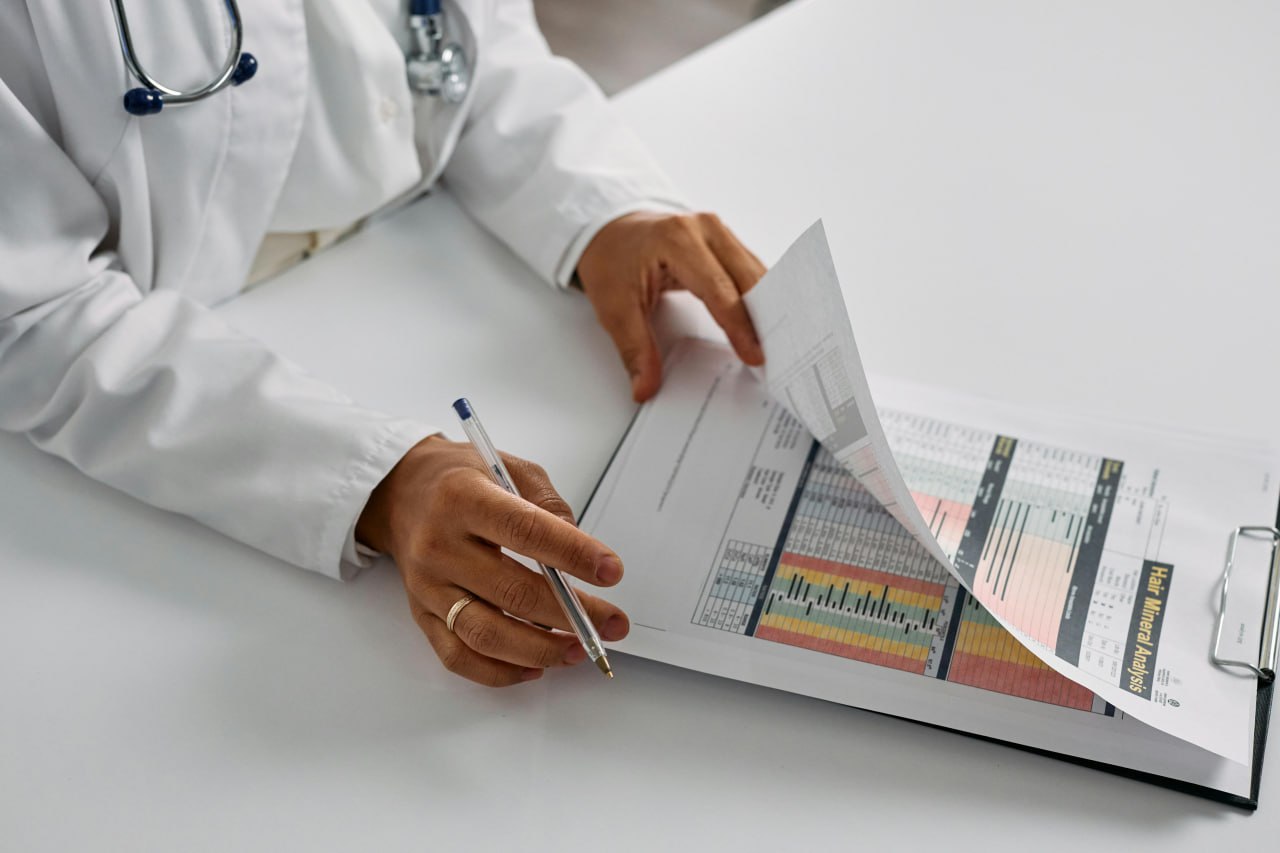
I want to be honest about what AI can and can't do for food sensitivity tracking - because there's a lot of hype in this space, and most of it overestimates what the technology actually does.
AI is not going to diagnose you. It won't tell you definitively "you're sensitive to fructans." What it will do is find correlations in your data that a human would miss - patterns across dozens of variables over weeks of logs that are genuinely hard to spot by reading through notes or scanning a spreadsheet.
For that specific task - pattern detection in messy, multi-variable personal health data - it's legitimately useful. Here's how to use it effectively, especially when combined with consistent tracking.
The pattern detection problem
After 4 weeks of consistent food and symptom tracking, you have something like 100+ log entries. Each entry has 5-10 fields: ingredients eaten, time, stress level, symptom types, symptom severity, bowel type, and so on.
To find your triggers manually, you need to look for patterns like:
- "Garlic appears in 8 out of 10 high-symptom days, and in 3 out of 15 low-symptom days"
- "High stress scores precede high symptom severity 70% of the time, regardless of what was eaten"
- "Bloating specifically peaks 6-8 hours after meals containing wheat"
- "Tuesday and Wednesday are consistently worse than the rest of the week"
A human can find these patterns with enough time and a good spreadsheet. But it's slow, it's error-prone, and most people's eyes glaze over when looking at 100 rows of data. The human brain is built to find patterns in faces and voices, not in food logs.
AI models - particularly modern large language models - are very good at exactly this kind of pattern detection and correlation analysis.
What AI can realistically do
- Identify which ingredients appear most frequently on high-symptom days vs low-symptom days
- Find ingredients that always appear on bad days and rarely on good days
- Detect correlations between stress scores and symptoms independent of food
- Identify timing patterns (do symptoms appear 4-8 hours after eating vs 12-24 hours?)
- Spot unusual patterns you hadn't considered (e.g. symptoms are worse on days after poor sleep)
- Surface potential red herrings (a food that appears on bad days but only because you eat it very frequently)
- Summarize your data in plain language with specific examples
What AI cannot do
AI analysis of your food diary is not a medical diagnosis. It identifies correlations in your personal data, not medically validated trigger confirmations. Any significant dietary changes based on AI analysis should be discussed with a doctor or dietitian, particularly if you're considering removing major food groups.
AI analysis of your food log:
- Cannot confirm a food sensitivity clinically (that requires elimination and reintroduction protocols)
- Cannot diagnose IBS or any other condition
- Cannot replace a gastroenterologist's investigation
- Will produce unreliable results with inconsistent or poorly structured data
The quality of the output depends entirely on the quality of the input. A month of careful, consistent logging with structured fields gives an AI a lot to work with. Two weeks of patchy notes in different formats gives it much less.
How the analysis actually works
The practical approach:
Option 1: Use a tracker with built-in AI analysis
Some trackers - including the IBS & Food Sensitivity Tracker - are designed specifically to generate AI-analyzable output. Your data is structured to make pattern analysis easy, and the tracker includes specific AI prompts optimized for food sensitivity analysis.
Option 2: Export your data and use an AI tool yourself
If you have a Notion database, a Google Sheet, or another spreadsheet, you can export it as a CSV or copy a table, paste it into an AI tool like ChatGPT or Claude, and ask specific questions about your data.
Modern AI language models are surprisingly capable at analyzing tabular data pasted as text. A table of 100+ food log entries, pasted into a conversation, gives the model enough context to identify correlations that would take hours to find manually - though the analysis is probabilistic, not definitive.
Asking good questions gets good answers
The quality of AI analysis depends partly on how you frame your questions. Vague questions get vague answers.
Less useful: "What are my food triggers?"
More useful: "Looking at this data, which ingredients appear most frequently on days where my symptom severity is 4 or 5? And do these same ingredients appear on low-symptom days?"
Even more useful: "Can you identify any patterns in the timing between meals and symptoms? Do symptoms tend to appear 4-8 hours after eating or 12-24 hours later? And does this vary by ingredient?"
Ask the AI to show its work. Don't just ask "what are my triggers" - ask "which specific data points support this conclusion?" A good AI response includes references to actual entries in your log, not just general observations. If it can't point to specific examples, treat the conclusion with more skepticism.
An example of what AI analysis looks like
Here's a realistic example of what useful AI output might look like from a food log analysis:
"Looking at your data, garlic appears in meals on 9 of your 11 highest-symptom days (days rated 4-5), compared to 4 of your 19 lowest-symptom days (rated 1-2). This is a notably uneven distribution. Your wheat consumption is also higher on bad days, though the pattern is less pronounced. Stress scores of 4-5 correlate with higher symptom days independent of specific foods - on 7 of your 10 highest-stress days, you also reported high symptoms regardless of what you ate. This suggests both dietary (particularly garlic) and stress components."
That's specific, evidenced, and actionable. It tells you what to test next. That's the bar for useful AI analysis.
The role of AI in the overall tracking process
AI analysis isn't a replacement for tracking - it's the payoff for tracking. The process looks like this:
- Baseline tracking (3-4 weeks, consistent, structured format)
- AI analysis (surface correlations and possible contributors)
- Plan a test (decide with a clinician or dietitian whether a structured change is appropriate)
- Reintroduction or challenge (look for a repeatable response without over-restricting)
- Personalization (use repeatable observations alongside professional advice)
AI can make a large log easier to review, but a correlation is not proof that a food caused a symptom. Its output should be treated as a shortlist of hypotheses, not a diagnosis or elimination plan.

Put this to work on your own data
Log meals and symptoms by voice or text. The app structures every entry and surfaces the associations worth testing - including the delayed ones a human reader would miss.
Start Tracking Free →AI can help surface correlations across weeks of food and symptom entries, especially when the data is structured and consistent. It cannot determine causation or diagnose a condition. Treat its output as possible associations to review with a healthcare professional and, where appropriate, test safely.


This article is for informational purposes and is not medical advice. Talk to your doctor before making dietary changes.
Start with the free 7-Day Trigger Discovery Challenge
Not ready for the app yet? Download the printable guide and work through 7 days of structured observation, with a few practical follow-up emails to help you stay on track.
- 20-page guide delivered immediately by email
- Daily meal, symptom, and lifestyle tracking pages
- Designed to help you spot early trigger patterns without overwhelm
Free - delivered straight to your inbox
🔒 No spam, we promise. Unsubscribe any time.
Or skip straight to the app - start tracking free →
Ready to find your triggers?
Track by voice. Let AI surface possible patterns.
Log meals and symptoms in seconds. AI structures your data and surfaces possible patterns, including delayed associations worth testing.
Start Tracking Free →Free to start · $59 one-time for full insights · No subscription