Tools
Paper food diaries and digital tracking apps each have real advantages. Here's an honest comparison to help you choose the format you'll actually stick with.
5 March 2026
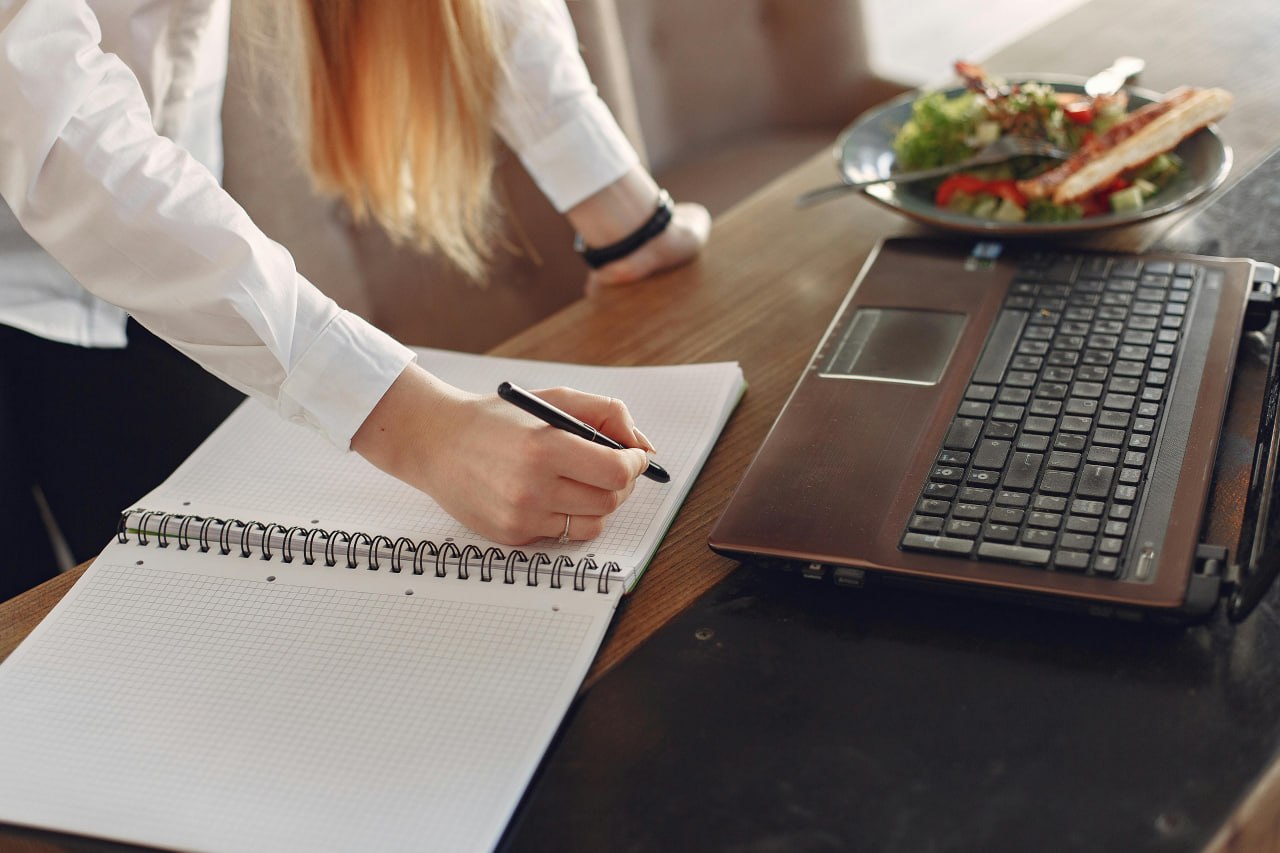
The best food diary is the one you actually use. That sounds obvious, but it's the most important factor — more important than features, format, or how much the system can theoretically do.
People overthink the tool choice and underinvest in the habit. So let's compare the two approaches honestly: not to crown a winner, but to help you figure out which one you'll actually stick with.
Paper gets dismissed as old-fashioned. For some people, it's the better choice.
Low friction to start. You don't need to unlock your phone, find the app, wait for it to load. You pick up a pen. For people who find phones a distraction or who frequently have low battery, this matters.
Nothing interrupts you. Phones lead to phone-checking. Paper doesn't. If you find that grabbing your phone to log a meal turns into 10 minutes on social media, paper removes that problem entirely.
The act of writing helps memory. There's research suggesting that writing by hand improves encoding and recall. Some people find that writing out what they ate helps them notice things they'd mentally gloss over when typing.
No account, no subscription, no app to update. Print the sheets, fill them in. Done.
If you use paper, keep the diary physically where you eat — on the kitchen counter, in your bag, at your desk. The single biggest predictor of whether you'll log a meal is whether the diary is within reach when you finish eating. "I'll write it later" almost never happens.
Analysis is hard. Looking for patterns across 4 weeks of handwritten notes is genuinely difficult. You have to either manually create a summary table, or read through everything repeatedly hoping patterns jump out. They usually don't.
Delayed symptoms are easy to miss. On paper, you'd need to flip back through pages to connect today's symptoms with yesterday's dinner. In a database, you can sort by date and see both entries side by side instantly.
You can't search it. Can't ask "how many times did I eat garlic on a day before bad symptoms?" Manually counting is slow and error-prone.
It doesn't travel well. Leaving your diary at home on a day you eat out means missing entries. Missing entries undermines the data quality.
Digital tracking has a higher setup cost but substantially more capability.
Searchable and filterable. Find every entry where you logged a specific ingredient. Filter by symptom severity. Sort by date. This transforms your diary into a dataset.
Syncs across devices. Log on your phone after lunch. Review on your laptop at the weekend. Your data is always with you and always up to date.
Better for AI analysis. If you want to use AI to find patterns in your tracking data — which dramatically improves the quality of insights you can get — you need structured digital data. A scanned paper diary could work, but a structured database is far better.
Reminders and prompts. Most digital tools let you set meal-time reminders. Paper can't remind you to log.
Phone = distraction. If picking up your phone to log a meal reliably turns into 20 minutes of other activity, digital tracking will undermine itself.
Setup friction. Building a database, downloading an app, or learning a new tool has an upfront cost. Some people never get past this.
Over-engineering risk. Digital systems are easy to over-build. A complex Notion database with 15 fields that takes 10 minutes per entry will be abandoned within a week.
| Printable / Paper | Digital | |
|---|---|---|
| Setup time | Minutes | 30 minutes to several hours |
| Daily logging time | 2–3 min if diary is nearby | 1–2 min with a good app |
| Pattern analysis | Manual (hard) | Sortable/filterable (much easier) |
| AI analysis | Possible but awkward | Natural fit |
| Distraction risk | None | High |
| Works offline | Always | Usually (check app) |
| Best for | Quick, consistent logging | Deep analysis and pattern finding |
There's no head-to-head clinical study comparing paper vs digital food diaries for IBS specifically. What the evidence does show is that:
These principles apply regardless of whether you're using paper or digital. The format is secondary to the habit.
Research on retrospective food recall shows that waiting until evening to log the day's meals introduces around 20% error in what people remember eating. The single most effective thing you can do for data quality — paper or digital — is log immediately after each meal, not at the end of the day.
Start with whatever you'll actually open. If you're a paper person, print a structured template and use it. If you're comfortable with apps and databases, set up a digital system.
After 4–6 weeks of consistent logging, most people find they want to do some form of analysis. At that point, if you've been using paper, consider transcribing your data into a simple spreadsheet so you can look for patterns more systematically.
The ideal approach for most people who want serious trigger identification:
Don't spend a week researching the perfect tracking system before you start. Imperfect tracking that starts today generates more useful data than perfect tracking that starts next month. Pick a format, start tomorrow, and refine from there.
The IBS & Food Sensitivity Tracker makes logging simple — then uses AI to find patterns you'd miss on your own.
Get the Tracker →Paper diaries are better for low-friction, distraction-free logging. Digital tools are better for analysis, pattern-finding, and AI-assisted insights. The format matters less than the consistency — choose whichever you'll actually open and use after every meal. For serious trigger identification, eventually getting your data into a structured digital format makes the analysis step significantly more powerful.
A simple, low-pressure way to start noticing patterns between what you eat, how your gut feels, and what might actually be triggering symptoms - before you commit to the full tracker.
Free — delivered straight to your inbox
🔒 No spam, we promise. Unsubscribe any time.