
Tracking
Low-FODMAP Reintroduction: Planning Food Challenges With a Dietitian
How dietitian-guided low-FODMAP reintroduction works, what to record, and why challenge responses are observations rather than diagnoses.


When a short low-FODMAP trial has helped, adding foods back can feel like risking that improvement. But staying with the restricted phase indefinitely is not the aim. Reintroduction is a planned way to explore tolerance and work toward a more varied diet with professional support.
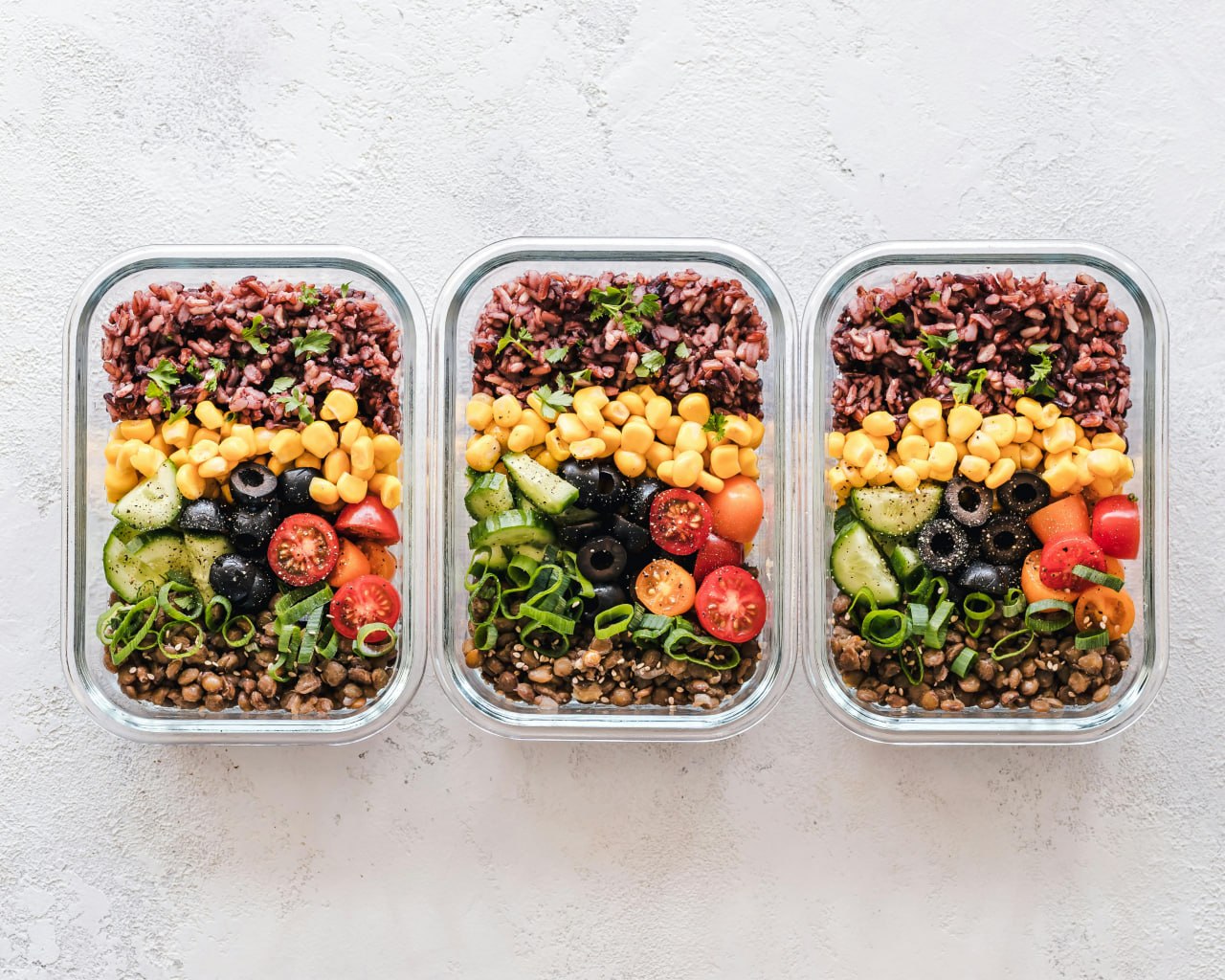
This guide explains the IBS-focused Monash low-FODMAP approach, not a home test for food allergy, coeliac disease, or every suspected food intolerance. It is an overview to discuss with a registered dietitian, not a personalized challenge schedule. The photograph above illustrates food preparation, not a recommended challenge menu.
Before starting: check the plan and the diagnosis
Arrange the process with a registered dietitian or a clinician with expertise in dietary management. NICE recommends that exclusion-diet advice for IBS comes from a healthcare professional with that expertise.
Monash describes an initial low-FODMAP phase of 2-6 weeks under dietitian supervision, followed by reintroduction when symptoms have improved. This is a protocol-specific range, not a deadline to find a food cause. Improvement does not prove that FODMAPs caused the symptoms. If the planned trial has not helped, review it with your clinician rather than extending restriction or removing more foods. AGA guidance recommends moving to another management option when a time-limited diet intervention has no clinical response.
Low-FODMAP reintroduction is not a diagnostic test for IBS, coeliac disease, or food allergy. If coeliac testing may be needed, speak to your clinician before cutting out gluten: a gluten-free diet can affect the results. If you already avoid gluten, ask how to proceed rather than restarting it yourself. Do not deliberately retry a suspected allergen at home; seek medical advice instead.
Restriction also needs a different plan if you are at risk of malnutrition, have difficulty obtaining enough food, or have an eating disorder. A past eating disorder, increasing food anxiety, or an already very limited diet is a reason to discuss suitability before continuing. The goal is adequate nutrition, including energy, fibre and dietary variety, not an ever-shorter list of permitted foods.
What a FODMAP challenge can tell you
Monash's approach examines FODMAP subgroups separately while the background diet stays low-FODMAP for this temporary testing phase. The categories include fructans, galacto-oligosaccharides (GOS), lactose, excess fructose, sorbitol and mannitol. This is not a rule that everyone must complete exactly six food challenges: food choice and the plan need to reflect the person and current guidance.
A food can contain more than one FODMAP, and content depends on the food, portion and preparation. A list of high-FODMAP foods is not a reliable list of single-group challenge foods. In its April 2025 reintroduction update, Monash changed some suggested foods and portions after laboratory retesting. Use current Monash challenge guidance with your dietitian rather than an old chart or a generic food list.
Even a carefully planned response is an observation under particular conditions, not proof of a cause or a permanent intolerance. Symptoms can vary with other meals, bowel patterns, stress, sleep, illness and medicines. A result with several changes or incomplete records may be inconclusive. Tolerating one tested portion does not establish unlimited tolerance, and symptoms after one food do not mean every food in its group must be avoided.
How a dietitian-guided challenge is usually organized
Monash's practical reintroduction guidance describes three-day challenges, with increasing portions and a break between foods. Your dietitian should set the food, amounts, order, monitoring and stopping plan. This outline is specific to low-FODMAP reintroduction, not a general elimination-diet or allergy protocol.
- Agree on a starting point. Begin when symptoms are well controlled, not in the middle of an unsettled flare. Review whether the background diet is nutritionally adequate and practical.
- Choose one planned challenge. Follow the current food-specific portions agreed with your dietitian. Monash commonly describes increasing portions over three days; this is not an instruction to keep increasing when symptoms worsen.
- Record what happens. Keep the temporary low-FODMAP background diet consistent and avoid starting other dietary experiments at the same time. Do not change prescribed medicines for a challenge without medical advice.
- Pause and review. Monash advises a 2-3 day break between challenges, or until symptoms settle. Do not start the next challenge while symptoms remain unsettled. A calendar gap does not prove which food caused an earlier symptom.
If symptoms become troublesome, stop increasing the challenge and contact your dietitian about whether to stop, defer or modify it. You do not need to provoke a severe reaction to collect useful information. Record the response without marking an entire FODMAP group as permanently unsafe. Allergic-type symptoms need medical assessment, not a smaller home challenge.
The full process can take several weeks and may need pauses. There is no universal completion date, fixed two-day recovery period, or requirement to push through every challenge. If professional support is difficult to access, ask your clinician about available dietetic services or another management approach rather than turning this outline into a self-prescribed restriction plan.
What to record without making the diary a verdict
- The agreed food, preparation, portion and time eaten
- Your symptoms before the challenge, then their timing, severity and duration
- Bowel changes and relevant context such as stress, sleep, illness or medicine changes
- Other meals or departures from the agreed background diet
- Whether symptoms settled during the break, or remained unsettled
- Explicitly symptom-free observations, missed logs and uncertainty
A blank diary is unknown, not evidence that you had no symptoms. Write “no symptoms noticed at this amount” only when you actually observed that. “Symptoms followed this portion” and “unclear because I was already unwell” are more useful working notes than “confirmed trigger.” Your dietitian can help decide whether another observation is appropriate and how much weight to give it.
For the broader interpretation limits, see our elimination diet reintroduction guide. It explains why repeated observations may inform a hypothesis without proving causality.
After challenges: widen the diet where possible
Personalization means using the observations with your dietitian to bring back tolerated foods and amounts while preserving nutrition and flexibility. It does not mean avoiding whole groups automatically or staying on the initial restrictive phase forever.
Tolerance and the food supply can change. Whether to revisit an uncertain or poorly tolerated food, and when, should be individualized rather than imposed as a recurring deadline. Monash's updated guidance notes that people already comfortable with their personalized diet may not need to repeat earlier challenges. This does not authorize retrying a suspected allergen.

Keep your observations together
Log meals and symptoms by voice or text, review the entries, and bring your notes to a clinician or dietitian. Find My Triggers supports recording and reviewing possible associations. It does not prescribe challenge foods or portions, diagnose an intolerance, or prove that a food caused a reaction.
Start Tracking Free →When symptoms need medical help instead
New, changing or persistent symptoms deserve assessment rather than more food challenges. Seek urgent medical advice for unexplained substantial weight loss, bleeding from your bottom or bloody diarrhoea, a hard abdominal lump, or breathlessness with palpitations and unusual paleness. NHS IBS guidance explains why these should not be assumed to be IBS.
Hives or another suspected food-allergy symptom needs clinical advice. Do not use this protocol to confirm or dismiss an allergy.
Sudden swelling of the lips, mouth, tongue or throat, difficulty breathing or swallowing, marked dizziness or fainting can signal anaphylaxis. Use an adrenaline auto-injector if prescribed and call your local emergency number immediately, even if you start feeling better. Do not continue a food challenge or wait for a diary pattern.
Low-FODMAP reintroduction is a dietitian-guided part of IBS dietary management, not a diagnostic test. Use current food-specific guidance, an agreed stopping plan and honest observations to work toward a varied diet. Uncertain responses should stay uncertain rather than becoming permanent restrictions.
Sources
- Monash University: The 3 steps of the FODMAP diet. Supervision, temporary restriction and personalization.
- Monash University: Practical tips for FODMAP Reintroduction. Challenge structure, symptom control and breaks.
- Monash University: Reintroduction Update, April 2025. Retested foods, revised challenge selections and individualized retesting.
- American Gastroenterological Association: Clinical Practice Update on the Role of Diet in Irritable Bowel Syndrome (2022). Abstract: time-limited trials and suitability for restriction.
- NICE CG61: IBS in adults. Assessment and professionally guided dietary management.
- NIDDK: Diagnosis of Celiac Disease. Gluten avoidance can affect diagnostic tests.
- NHS: Food allergy. Symptoms and medical assessment.
- NHS: Anaphylaxis. Emergency symptoms and action.
- NHS: Symptoms of IBS. Reasons to seek medical and urgent care.


This article is for informational purposes and is not medical advice. Talk to your doctor before making dietary changes.
Start with the free 7-Day Trigger Discovery Challenge
Not ready for the app yet? Download the printable guide and work through 7 days of structured observation, with a few practical follow-up emails to help you stay on track.
- 20-page guide delivered immediately by email
- Daily meal, symptom, and lifestyle tracking pages
- Designed to help you spot early trigger patterns without overwhelm
Free - delivered straight to your inbox
🔒 No spam, we promise. Unsubscribe any time.
Or skip straight to the app - start tracking free →
Ready to find your triggers?
Track by voice. Let AI surface possible patterns.
Log meals and symptoms in seconds. AI structures your data and surfaces possible patterns, including delayed associations worth testing.
Start Tracking Free →Free to start · $59 one-time for full insights · No subscription